
A new YouTube episode hit the Tubeways today, and it’s my review of the book Restless Dreams by Victoria REDFIELD.
Monthly Archives: June 2025
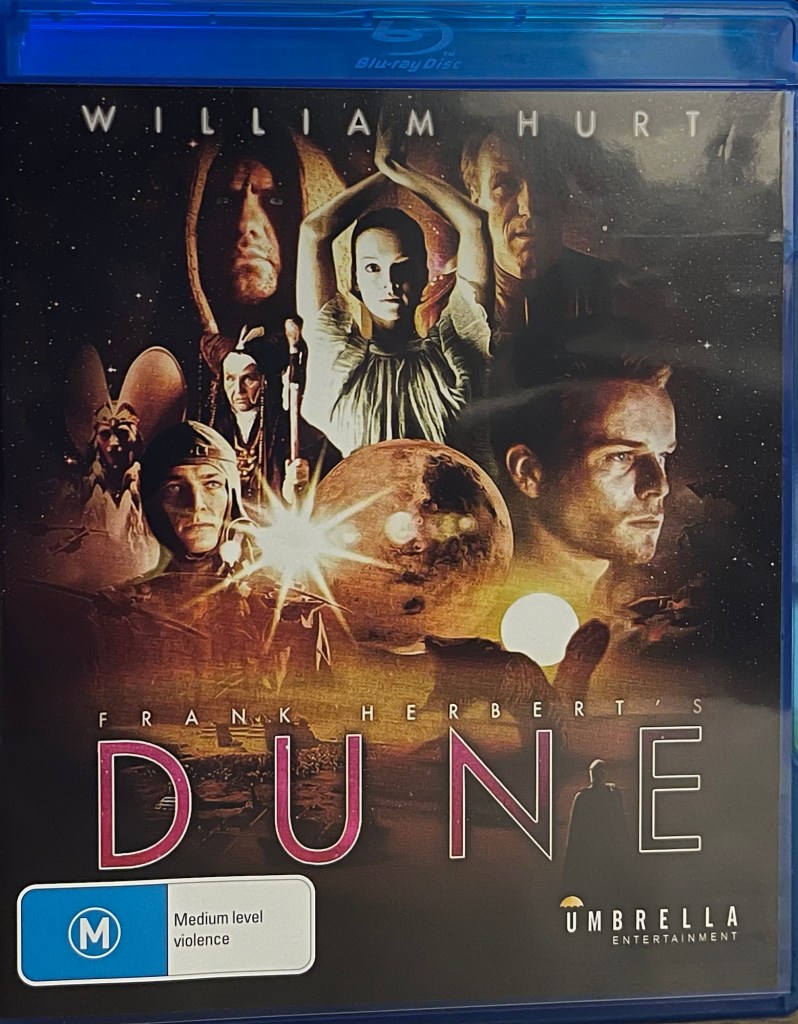
FRANK HERBERT’S DUNE (2000)
FRANK HERBERT’S DUNE (2000)
David Lynch’s version of Dune had one massive problem: its length. The business of movies has changed so much and when Lynch’s film was released, the idea of a series of films made as a continuing narrative was rare. Sure the Godfather flicks and Stars Wars were exceptions, but the idea of a The Hobbit/ Harry Potter/ Dune (2021)/ MCU mega series didn’t seem to exist, so Lynch’s was more like the plot synopsis on the back of a novel rather than a full adaption of the story.
In 2000, we got a TV version of Herbert’s story, divided into three episodes, each of about 90 minutes each. As it was a TV show, it was expected to be episodic with soap opera elements, the story divided with crescendos at the appropriate times to are the viewer keen for the next episode.
To explain this story in full. I shall just ‘borrow’ the plot synopsis from the review of David Lynch’s Dune (1986) reviewed elsewhere in this site:
‘In the far, far, far future, mankind has banned all ‘thinking machines’ (i.e. computers), and mankind has become reliant on two other forms of technology: machines of war and ESP. Mankind has formed its government into something of a feudal system, called the Imperium, and constant push and pulls of territory are always happening, either through diplomacy or all out war.
One planet of particular interest is Arrakis, a desert planet that has a drug called ‘melange’ on it, which prolongs life (something all kings have wanted throughout time) and when excessively taken, can mutate the body and mind, a side-effect being that individuals are able to fold space for rapid space travel.
Behind the scenes of all of humanity’s politics are the Bene Gesserit, a religious order controlling everything, and this is where our story begins…
Yep, this was just the background one requires to understand what comes next… blimey!
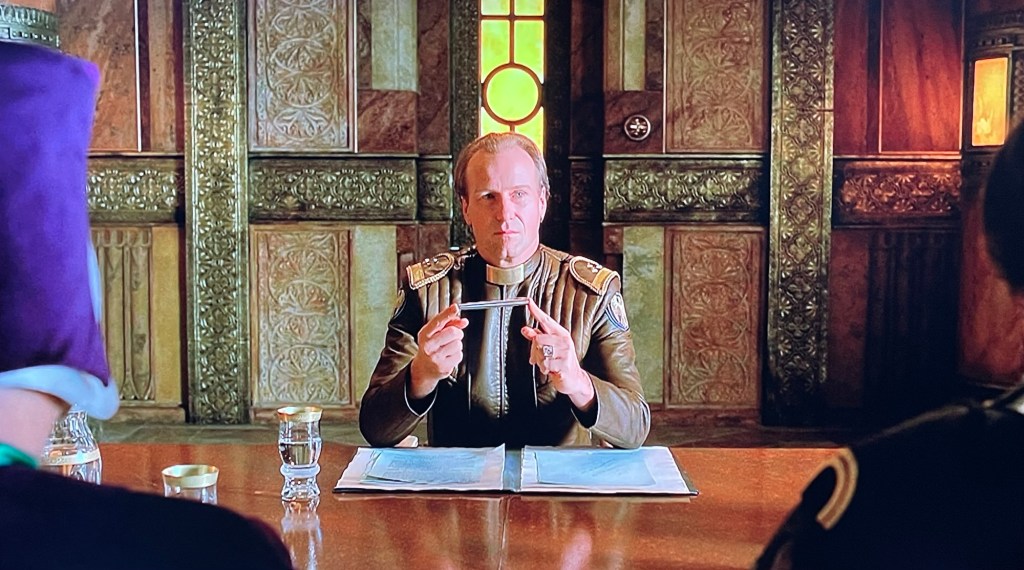
Our film tells of the family of House Atriedes, led by Duke Leto (William Hurt), his partner (described as a concubine) Lady Jessica (Saskia Reeves) and their son, Paul (Alec Newman) who have been instructed by the Emperor (Giancarlo Giannini) to travel to the planet of Arrakis to take over the production of the spice, melange, known to extend life and give amazing powers to those who take it.
What Leto does not know is that the Emperor is intending to start a war on Arrakis between House Atriedes and the villainous House Harkonnen, presided over by the in this version, less than horrifying Baron Harkonnen (Ian McNeice) so that he can have him killed as an act of war.
What NO ONE knows is though, is that Paul has powers of his own, hidden deep within him, and his visions of a life on Arrakis become more intense as war looms…’
Obviously, the story remains the same but there is far more explanation due to the total 270 minutes each runtime compared to the Lynch film’s 137 minutes. It gave an opportunity to enter the world of the Weirding Way, a martial art that Lynch replaced with the Weirding Modules in the weapons for expediency of the battles in the short run time. This does show more and even references some of the other books in small scripts ways so it feels more like the beginning of an epic universe which it did become with its further mini serieses. It is a far more palatable story from the narrative point of view, but… and there’s a few big buts.
… and these aren’t the big buts I love, I cannot lie.
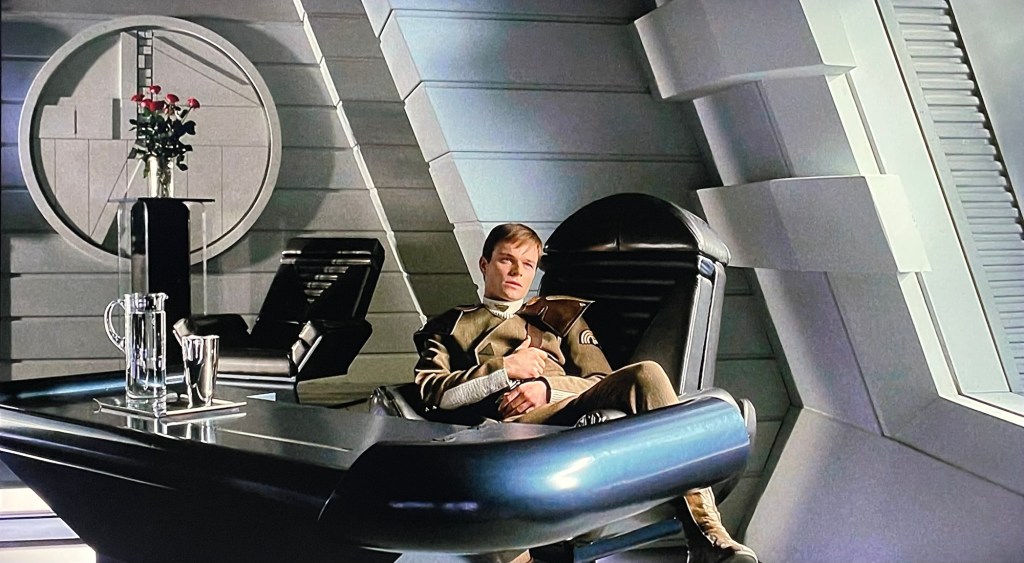
First the special effects are exactly what one would expect from a TV show from 25 years ago (as of the date of this reviews writing). I imagine a production with SO many actors within it that was on television would have not dedicated too much of the budget there, and it shows. I’m sure somewhere there is a PlayStation 2 laughing at the quality of the effects. Now considering many if my favourite films are ones with decidedly sub-par effects, it seems to me that the Lynch film was given far more for its budget, double actually, and obviously the 2020s version have had even more thrown at them, which makes the effects look… well, like a TV show, but worse, an early 2000s TV show. Credit where credit is due though, the UV reflective contact lenses on the Fremen look alright.

This leads me to the design. Looking like a combination of Star Wars Episode 1, which makes sense due to the timing of its release and the fashion for sci-fi design at the time, and of the ‘landing party’ scenes in any episode of Star Trek post The Next Generation, nothing looks real, and instead the entire film looks like ‘TV’. The outfits are a combination of medieval heraldry and post 90s comic book costume design and just look terrible. Of particular, Baron Harkonnen’s dress is borderline hilarious, not helped by McNeice’s panto performance.
Thankfully, McNeice’s performance is the only bad one, but it makes any scene with him in it to make the Baron look more like a vaudeville villain instead of a proper threat like the performances from Kenneth McMillian or Stellan Skarsgård in other Dune productions. This cartoonish threat does diminish a lot of the rest of the film and it’s a shame that so much of the show’s delivery of script is sullied by it. Thankfully, the TV show Doc Martin exists so McNeice can make a living outside of holiday times.

I did really want to like this because I do really like the source material, but I just don’t think it is worth revisiting anymore other than as a curio and as seeing how TV would approach something as dense as this. Sadly, the newer films are a far better option as far as design, cast and storytelling, and Lynch’s is better just for its creativity.
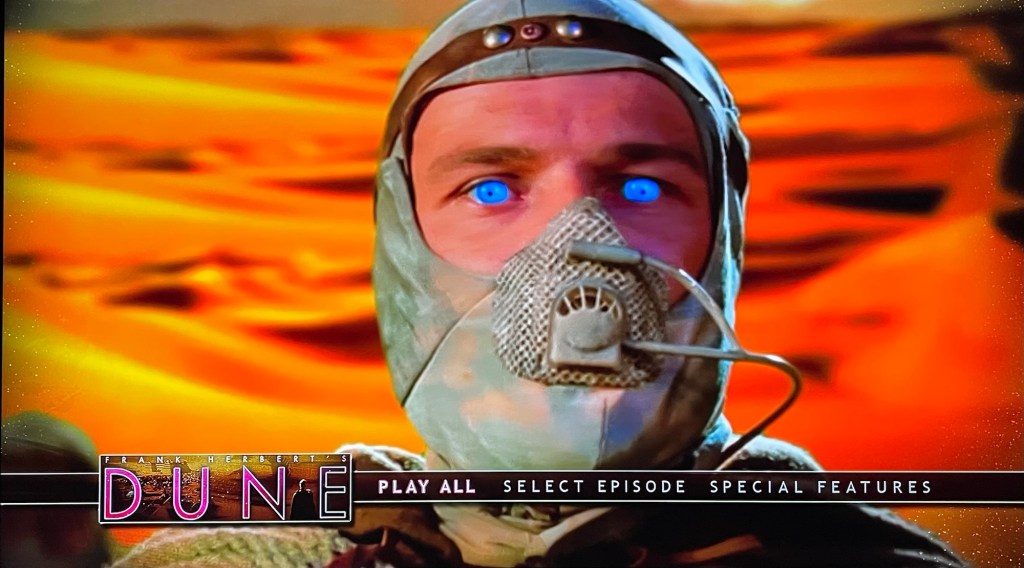
Extras:
On this collection we have two ‘makings of’: one is the Filmmaker’s Vision and looks at the making of part one, whereas The Production Story is the making of part 2, so I guess part 3 was not worthy! There is also a trailer for the film.
Film:4/10
Extras: 5/10
Rewatchability: 2/10

This Bluray was purchased from an eBay seller.
DUNE (1984)
DUNE (1984)
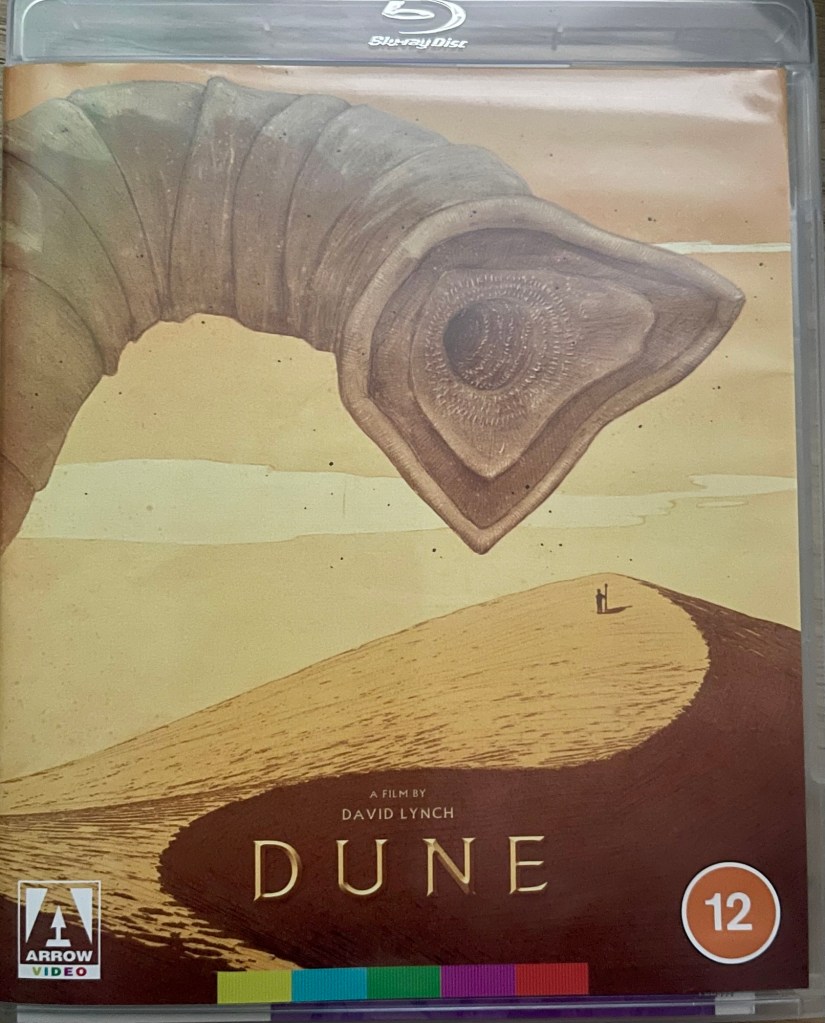
I became a fan of the Frank Herbert novels of Dune because of this film. Prior to seeing this film the only sci-fi I’d read were comics, and maybe some Star Wars novels, some H. G. Wells or Jules Verne and even more comics as I mainly read crime and mystery novels prior, but this film politely took me into a dark room, sat me down and explained to me that sci-fi concepts can be so much more than just space war, invisible men, submarines, and aliens who can fly and try to help mankind.
Frank Herbert’s Dune was first published as a serial in Analog Science Fiction Magazine in 1963 but was compiled into novel form, released in 1965. It is the first part of an entire series of books set in this universe, and won both the 1966 Nebula Award and Hugo Award.
The story of Dune is incredibly nuanced and has so much involved that a simple plot synopsis is hard to explain with a 20,000 word review which would get a pile of ‘TLDR’ comments so I shall try to simplify it.
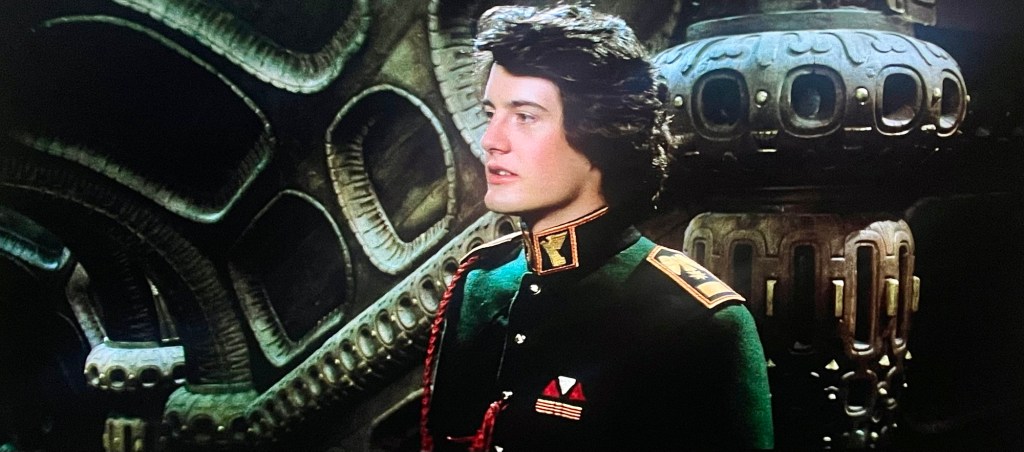
In the far, far, far future, mankind has banned all ‘thinking machines’ (i.e. computers), and mankind has become reliant on two other forms of technology: machines of war and ESP. Mankind has formed its government into something of a feudal system, called the Imperium, and constant push and pulls of territory are always happening, either through diplomacy or all out war.
One planet of particular interest is Arrakis, a desert planet that has a drug called ‘melange’ on it, which prolongs life (something all kings have wanted throughout time) and when excessively taken, can mutate the body and mind, a side-effect being that individuals are able to fold space for rapid space travel.
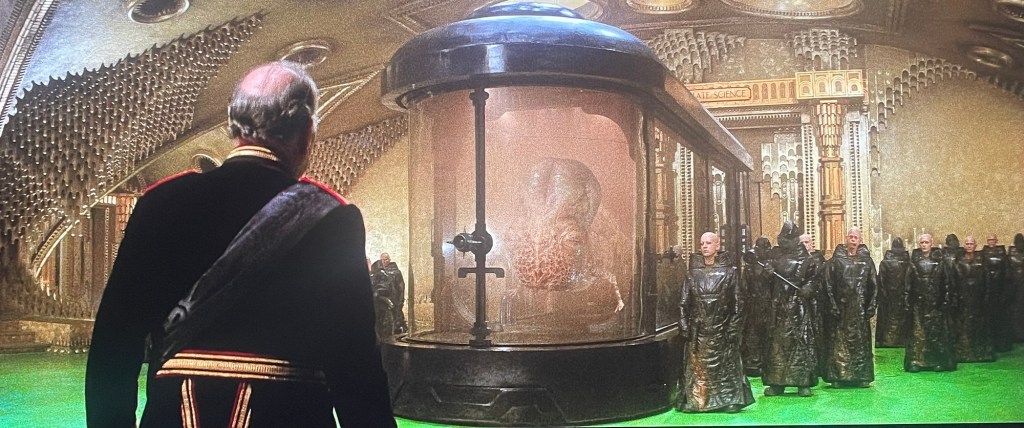
Behind the scenes of all of humanity’s politics are the Bene Gesserit, a religious order controlling everything, and this is where our story begins…
Yep, this was just the background one requires to understand what comes next… blimey!
Our film tells of the family of House Atriedes, led by Duke Leto (Jürgen Prochnow), his partner (described as a concubine) Lady Jessica (Francesca Annis) and their son, Paul (Kyle MacLachlan) who have been instructed by the Emperor (José Ferrer) to travel to the planet of Arrakis to take over the production of the spice, melange, known to extend life and give amazing powers to those who take it.
What Leto does not know is that the Emperor is intending to start a war on Arrakis between House Atriedes and the villainous House Harkonnen, presided over by the horrifying Baron Harkonnen ( Kenneth McMillan) so that he can have him killed as an act of war.
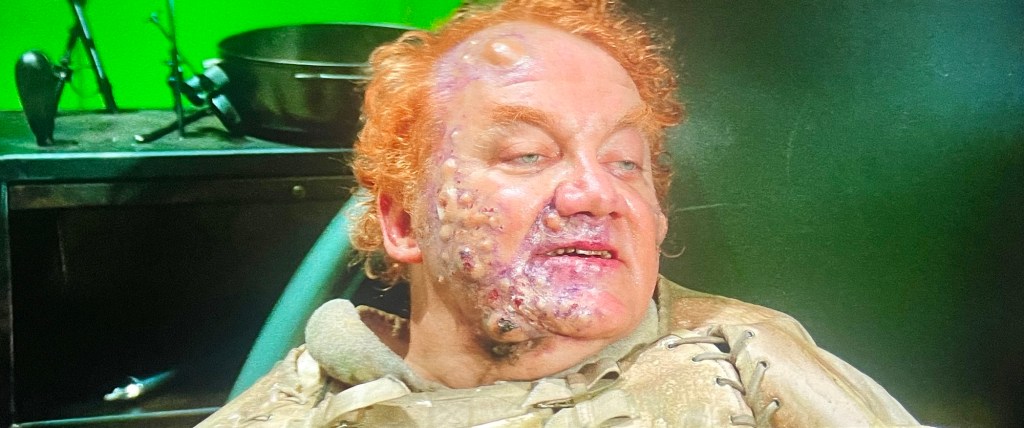
What NO ONE knows is though, is that Paul has powers of his own, hidden deep within him, and his visions of a life on Arrakis become more intense as war looms…
It’s hard to do a synopsis of this first version of Dune, directed by David Lynch, as it in itself is merely a 2 hour synopsis of a book that goes into far greater detail of the politicking and the war that happens. Lynch’s directorial work here is almost dreamlike, and realistically, like most people who saw it when it was first released, it became a tasting platter for big bold science fiction and turned so many of us onto Frank Herbert’s work.
I love the cast in the film. I feel that almost everyone is amazing in their roles but at a pinch, I must say that I think the Fremen, the people who live on Arrakis, this dry, arid world that appears to be difficult to survive upon, won’t quite look right. As much as I like Everett McGill and Sean Young, I feel they don’t look like people who have survived this weather. I feel they have just emerged from a street in Hollywood.
It’s such an unusual cast as well; a mixture of young and seasoned actors, and even a pop music star in Sting, playing Harkonnen’s nephew Feyd, all are fabulous in their roles and it almost feels at times like an elaborate stage production in its presentation.
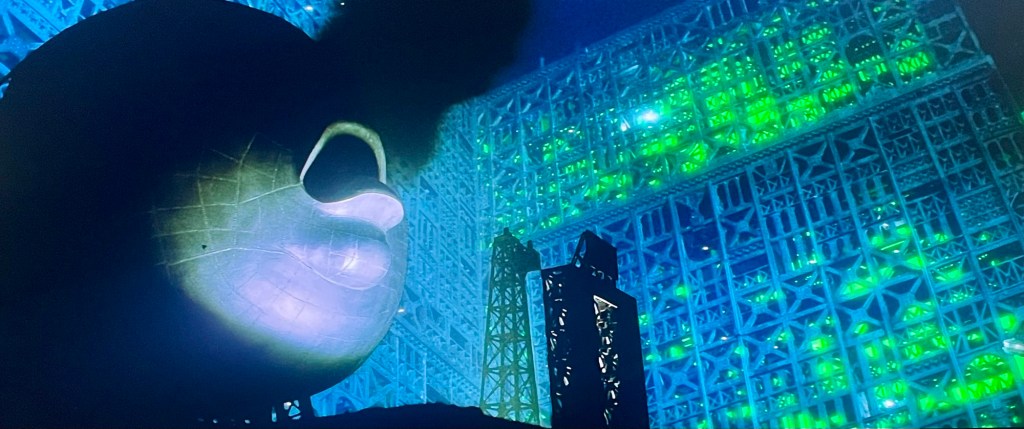
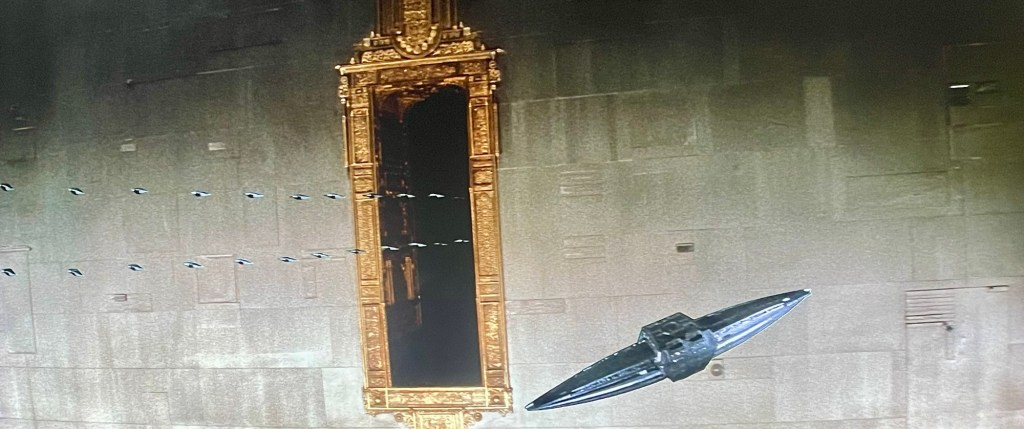
Speaking of its presentation, the look of the film is the big win for me. Impossibly large spaceships that look torn from gothic architecture. Ships that are sleek and according to physics, would be impossible to fly on any planet with any sorts of atmosphere. Interiors that mix that gothic architecture with art deco, Victorian, maximalist and brutalism, and then also have Industrial Revolution styled smoke and gas belching from bizarre chimneys. Each of these lands match the personality of their families, and even as House Atriedes moves from a water filled world to that of Dune, the entire family structure alters: the change in environment changing them to their very core.
The problem with this film though, is something I stated earlier: it’s a summary. Films adapted from books almost always adjust little portion, both for timing and storytelling issues, and sometimes just because the screenwriter or studio thinks they should put their own stamp upon it – they should not – and the problem Lynch had here was time, and even though it’s a visual feast with a stunning choice of actors, it does suffer for it. The film has so much information in the first third, that the rest of the film speeds by at a speed that doesn’t pause to explain intentions and the ideas of the world.
I have recently been conversing with a friend who saw I was watching this film and he was surprised by how high my Letterboxd score was for it, but he did not grow up with it. He is of a post-Lord of the Rings age where people are prepared to watch almost impossibly long films that are divided up into trilogies, instead of filmmakers having to be creative and working within their time limits. Even look at the Marvel films: these aren’t individual films but are actual comics themselves with their periodical releases. As long as the whiz-bang, Disney-fied action film structure is maintained and there is no opportunity to get bored, or more importantly, craft story, people are happy, which is why cinema is in such a poor state, and why the world is a lesser place without talents like David Lynch in it.
I constantly criticise people for allowing movie companies to manipulate their nostalgia with remakes and sequels, and my score below reflects more my nostalgia for this film than its actual quantity or accuracy of translation from the book, but I stand by that score regardless.
Extras:
There are two audio commentaries, one by Paul M. Sammon, author of Future Noir: The Making of Blade Runner and former studio executive, amongst other roles in cinema production, and another by Mike White, from The Projection Booth Podcast. Between these two commentaries you don’t just get a good look at the production of the film, but a history of the De Laurentiis family, and Hollywood itself. Both fascinating!
Impressions of Dune is a 2003 retrospective on the making of the film, with input from MacLachlan, De Laurentiis, Freddie Francis (cinematographer) and Antony Gibbs (editor), Harlan Ellison (author) and David Anson (film critic).
Designing Dune talks about David Lynch and Tony Masters (Production designer) and the collaborative process they went through to achieve the look of the film.
Dune FX looks, obviously at the special effects of the film and what an effort it was to create a movie with so much necessary effects on a budget.
Dune Models and Miniatures is a piece I’m interested in as in addition to doing this glorious website, I also make and paint models. Some amazing builds for sure!!
Dune Costumes as you would expect, looks at the magnificent outfits created for the film which are still impressive today.
Deleted Scenes with an Introduction by Raffaella de Laurentiis has ten deleted scens and also talks about the mythical Director’s cut that was supposed to go for 4 hours.
Destination Dune is a hype feature from the 80s gearing people up to the release of Dune.
There is a bunch of Trailers and TV Spots and a series of Image Galleries, which normally I would criticise, but in this case there are various production designer and poster art involved as well just just behind the scenes claptrap. These image galleries are done as a slide show.

Film: 8/10
Extras: 10/10
Rewatchability: 10/10
This Arrow Video release Bluray was purchased from Metal Movies.
 Digital Retribution