FALLING DOWN (1993)
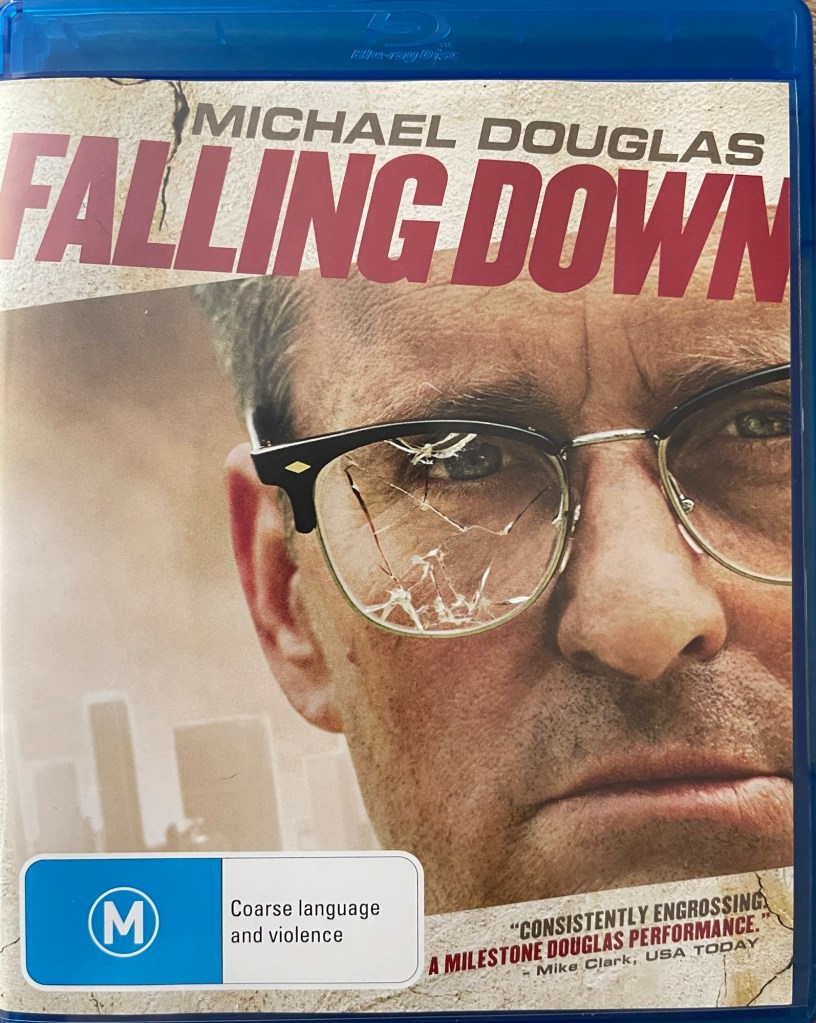
Movies are a wonderful thing insomuch that as you change through your life, they hit differently.
I first saw this film in 1993 at the cinemas that were just a short walk from my house. I was in love with two things then; the woman who is still my wife all these years later, and the movies. I’d grown out of comics and toys and video games and I hadn’t yet discovered the joys of writing like I do now.
The second time I saw this film was on the 29th July 2009. I know that date because I bought it on the day it came out. At that point had three loves: I’d been married over ten years to the same woman, a daughter we shared and still, good old cinema.
Finally I watched it today. Married 30 odd years, adult daughter, and me still writing and loving movies, though now I only work casual after being a retail manager for 30 odd years as I had a stroke during lockdown (unrelated to the vaccine) and can’t really work full time due to a bit of PTSD and a mild learning disorder.
I know, I know: why am I telling all this boring personal crap?well it is relevant to movies hitting differently. When I first saw it, I watching it as a fan of film, a fan of director Joel Schumacher and a fan of Michael Douglas. I didn’t get excited by the politics of the film because basically I am not sure I fully understood them at that age.
The second time I watched it more as a student of film, and looked at the nuances of how it was made and honestly paid little attention to the story but more on performances and mise en scene and all that cool movie stuff that we feel is so important.
Now, I see what it really is: it’s a story about how easily we get chewed up and spat out by society. It’s about how we rarely see how we are seen by others. About how no matter how important you feel you are in a situation, you are not. It’s about how people talk about main character energy, but no one actually has it. In a hundred years, nothing you have done matters, but it’s how you deal with that realisation is the key to your happiness.
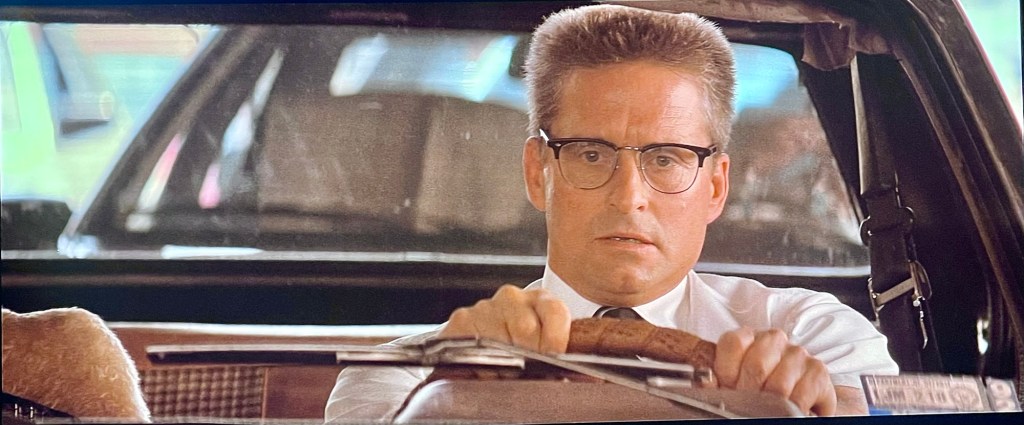
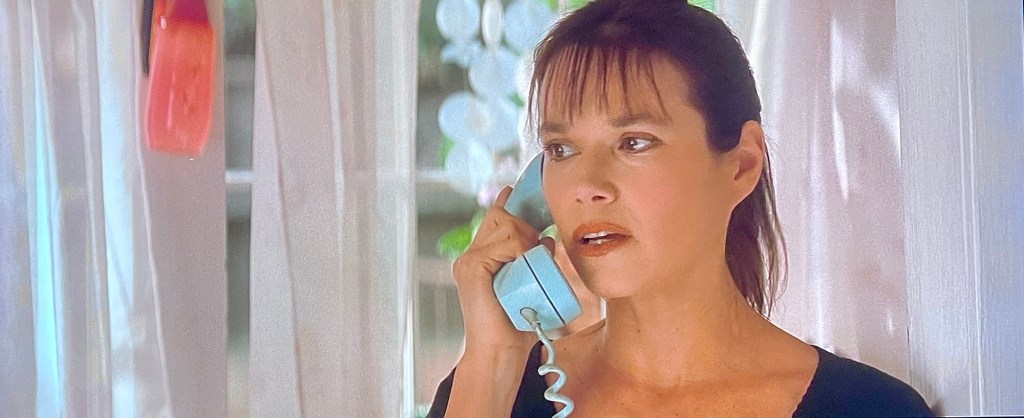
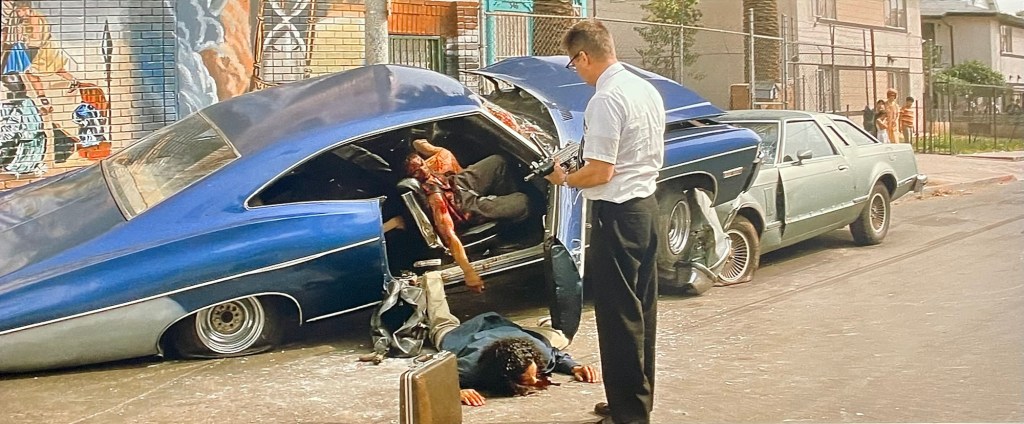
Falling Down was written by Ebbe Roe Smith, who also gave us Turner and Hooch, and was directed by Lost Boys director Joel Schumacher, and tells the story of a man we come to know as D-Fens (Michael Douglas) who after sitting in a traffic jam on a hot day, decides to abandon his car and make his way to his estranged ex-wife, Beth’s (Barbara Hershey) house to visit his daughter, Adele (Joey Singer) on her birthday, and the trail of violence he leaves in his wake as he sees so many people in the city seeming trying to stop him.
Falling Down is also about Detective Prendergast (Robert Duvall), a cop who has been convinced by his wife (Tuesday Weld) to retire, even though he clearly doesn’t share her desire, but is willing to comply for her mental health. On his last day though, he is the only one who joins the dots on D-Fens’ rampage, and convinces his former partner, Sandra (Rachel Ticotin) to help him solves the puzzle of who the man is that’s committing all these acts of violence across the city.
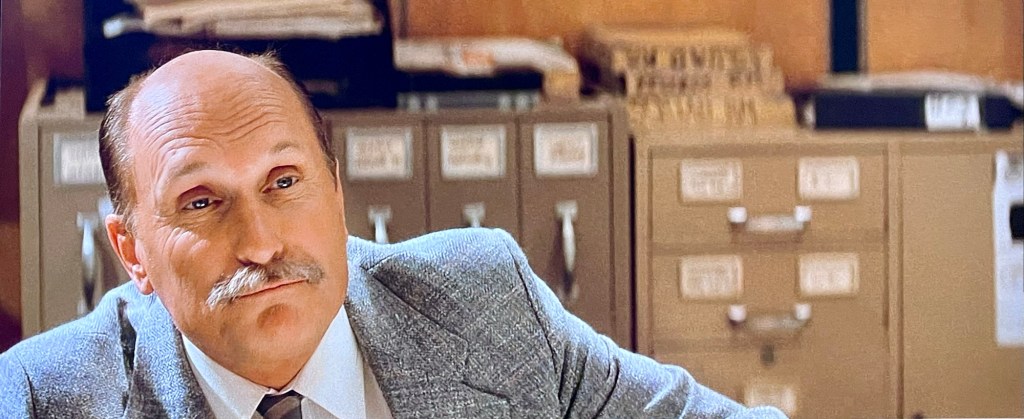
I feel this film is about the pressure of a modern lifestyle and the pressures put on us from others around us, and how we make conscious choices as to how we deal with them. I think as a younger man I did sympathise with D-Fens but as I have matured, and I use that term very loosely, I see so much more in this film. I think it’s also about futility as well, as no matter how hard you work, it’s not appreciated in the way you would like to think it does.
The film has so much racism and prejudice stamped all over it and that is certainly a sign of the times it was made, and I hope as a society we have become a little more tolerant. The film cleverly initially identifies D-Fens from a misunderstood man, to vigilante to nutjob quite subtlety that you don’t even immediately become aware that the guy who you were at first thinking ‘yeah, I’m with you brother’ has become psychotic, and as we explore his background, may have always been that way. They even make you doubt your feigning support as you meet an intolerant crackpot who aligns himself with D-Fens, much to his disgust, and he rejects what he has become entirely.
I love all the choices of the actors in this film. I have a theory that every movie’s story is a ‘B’ movie’s story but it’s the choice of actors that elevate it. This is certainly the case here. All the budget would have gone to the quality of actors and the performances, but everyone, from Douglas’ slow descent into psychopathy to Weld’s hysterical wife, nail their performance. Sure they all feel a little cartoonish at times but I think Schumacher’s direction sometimes borders on that.
Another thing I do really like about this film, and it’s something that was brought to my attention in a book about Psychos and Madmen in film (it may have been by John McCarthy, I can’t quite remember) is that most films like this already have the psycho in full flight, revelling in their psychopathy. In this film, we see the last straw leave the antagonists mind, and through the course of the film you find that while you have sympathy FOR him, you don’t sympathise WITH him, something that I didn’t necessarily understand at all previously. Seeing the slow devolution is am impressive feat in the story, direction and performance.
Weirdly, I used to like this film a whole lot more, but it resonates so different with me at my current stage of life, so it’s dropped of maybe a whole point. Is that because it rings true or because I’m in a different place politically? I guess that’s something for me to work out.
… it’s certainly evidence of what a wonderful thing cinema is, as I always thought.
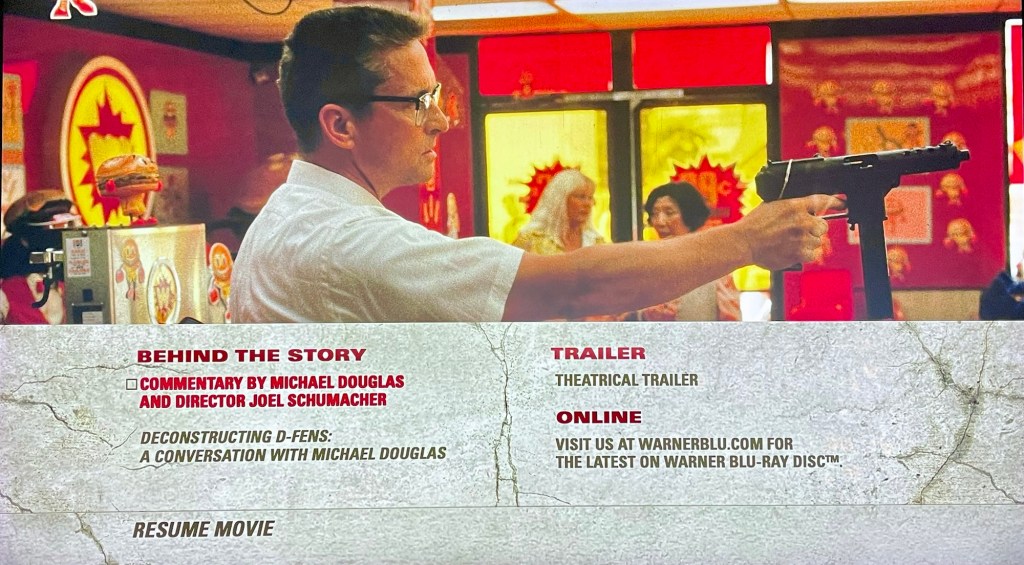
Extras: Not many extras on this disc, but the directors commentary by Schumacher, Smith, Douglas, editor Paul Hirsch and others is fascinating, as is the interview with Douglas about the character of D-Fens and the different obstacles the film had to overcome to get to the cinema.
There is also a trailer.
Film: 6/10
Extras: 6/10
Rewatchability: 4/10
This Bluray was purchased from JB Hifi
 Digital Retribution