MASTERS OF HORROR: IMPRINT (2006)

The cover to the Australian DVD

MASTERS OF HORROR: IMPRINT (2006)

In the early 2000s, an amazing TV series was produced called Masters of Horror, created by Mick Garris, where famous horror directors like Dario Argento, Don Coscarelli, Stuart Gordon, John Carpenter and others got to create short one hour horror movies, and Takashi Miike was one of the directors asked to participate.

Notoriety follows director Miike like a haunted shadow of a tortured ballerina whose sole purpose is to cut out his tongue and slice off his nipples. This, his ‘banned’ episode of Masters of Horror, sits well amongst his work. Like most of his movies, the story simmers, and is broughtslowly to a boil. With images of beautiful pain and exquisite suffering that stays with you for a time after the movie has finished.

Christopher (Billy Drago)

Based on a novel Bokke Kyote, by Shimaku Iwai (who also had a small role in the film), the screenplay for this film was written by Daisuke Tengan, who has worked with Miike before when he adapted the novel Audition by Ryu Murakami into the wonderful film of the same name.

Imprint tells the haunting tale from the 1800s of American journalist, Christopher (Billy Drago), who travels to an island in Japan in search of the prostitute, Komomo (Michie) who he had abandoned years earlier, promising to return for her. Finding himself unable to locate Komomo, he takes residence in a bordello, where he hires the services of a deformed hooker (Youki Kudoh), but instead of taking her for carnal pleasures, he asks her to tell him a story, and so, she recounts to him the fate of his beloved Komomo, and so begins a story of rape, torture and degradation…

Youki Kudoh as the story teller

Beautifully shot, Imprint at times is like watching a traditional Japanese painting come to life. The flame haired whores with their blackened teeth take on the appearance of oni or evil spirits, who live on islands and take much delight in the torture of others. Miike’s ability to take the obtusely sickening and turn it into an image of beauty is a gift that few directors have, but he has in spades.
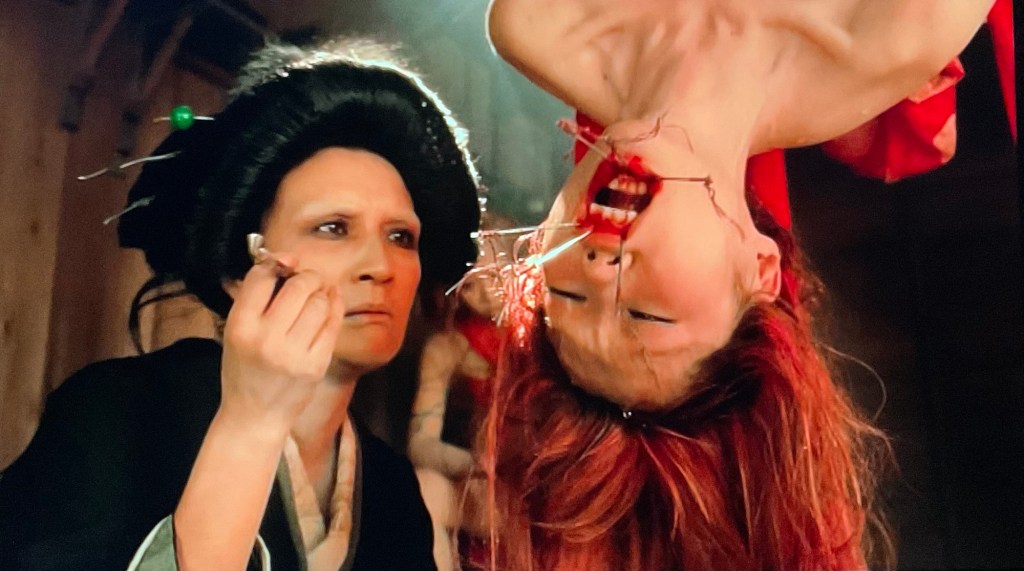
Wow! Now THIS is torture porn!

The only real problem I found with this episode of Masters of Horror was Billy Drago’s performance, but I do not think that was his responsibility. Obviously, this film was to be part of an American television series, and the performances were to be executed in English, but as much trouble as some of the Japanese cast members had in performing in English; it seemed that the normally wonderful Drago was being misdirected, and appeared to be overacting. I imagine that this was due to miscommunication from the language barrier between Miike and Drago.

Everything Miike did right with the nightmare of Audition, he has done again here with Imprint. Both brutal and beautiful, Imprint is an experience not to be missed. The extras on this DVD make it a pretty easy sell as well.
The menu screen to the Australian DVD

Disc: There are 6 extras on this disc.

Imprint: I Am The Director of Love and Freedom Takashi Miike is a comprehensive interview with Miike, not just about this film, but about j-horror and its continuing influence in western cinema.

Imprint: Imperfect Beauty is one of the better spfx documentaries I have seen in a while.

Imprint: Imprinting is basically a ‘making of’ but an extraordinarily good one. This doco features interviews with many of the cast and crew including Nadia Vanessa, the dialogue coach who taught most of the actors how to play their parts phonetically, and is incredibly thorough and interesting.

There is a brief but fairly comprehensive biography of director Takashi Miike.

Commentary is by Chris D from American Cinematheque and Wyatt Doyle of NewTexture.com. While these two really had naught to do with this film, the talk-through is informative, and their discussion about the total influence of western to Asian and Asian to western cinema is enlightening and provides some independent insights into the production and decisions made about this film.

DVD-ROM – screensaver and script (Unreviewed as I have no longer have a PC with a disc drive in it)
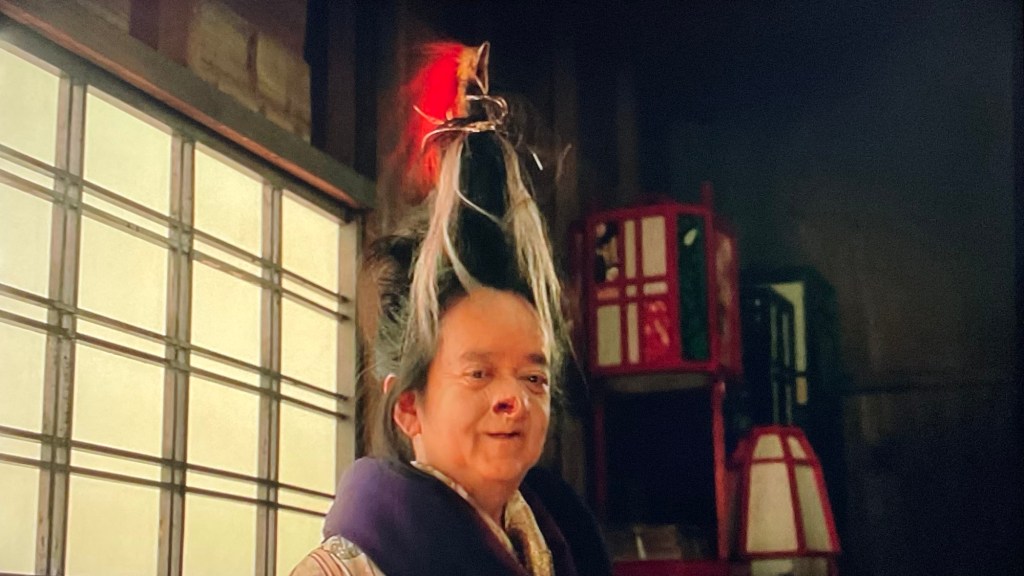
The weird chicken lady… yeesh!

The DVD was purchased from Ezydvd.
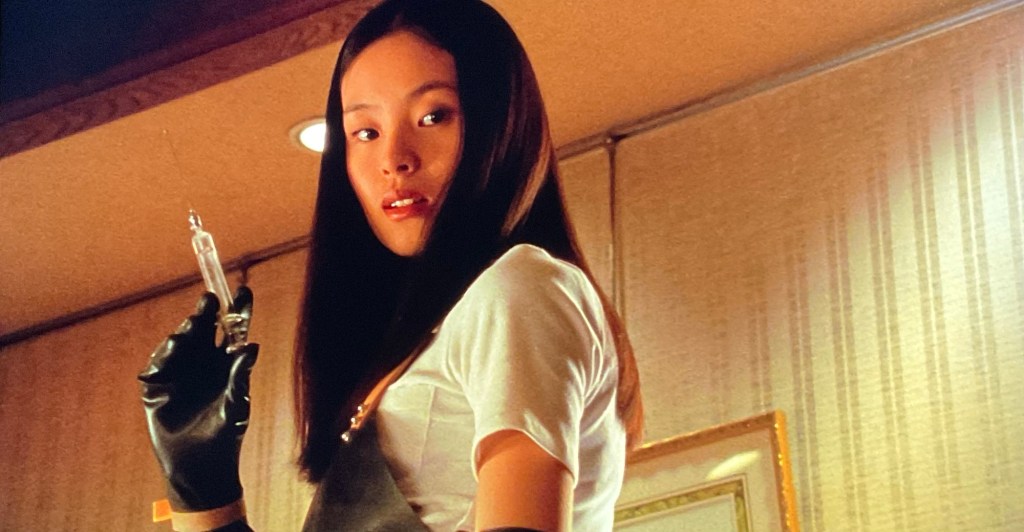
AUDITION aka ǑDISHON (1998)

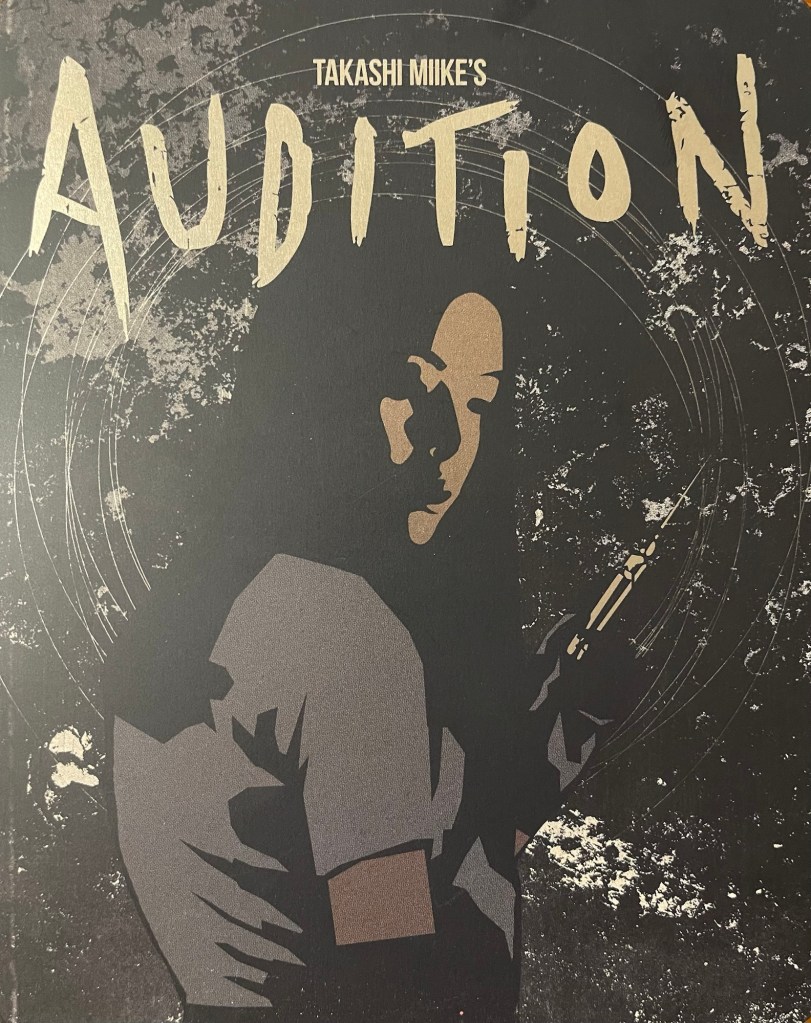
The steelbook cover to Arrow Video’s Audition

AUDITION aka ǑDISHON (1998)

I first saw Audtion many years ago on a terrible DVD released in Australia that was too dark and muddy and even in such an awful format, it effected me. This Bluray release has none of that and it is an even better watch, as you would expect.

Director Takahashi Miike (Ichi the Killer) has created such a mind blowing psycho-sexual piece of cinema that to stick it in a box marked ‘psychological thriller’ or ‘horror’ is to take away its impact. When first released in Japan in 1999 as Odishon, it was played in such a poor array of dead-end theatres that it whimpered out and looked like it was going to disappear without a trace. Luckily, in 2000, Audition was then picked up for film festivals in both Vancouver and then Rotterdam, where it won both the FIPRESCI prize and the KNF award, and in the following year at Fantsporto in Portugal, it won the International Fantasy Film Award – Special Mention award and was nominated for International Fantasy Film Award.

Based on a story by Ryu Murakami, Audition is the tale of a man, Shigeharu Aoyama (Ryo Ishibashi), who, after the death of his wife, finds it hard to meet a new woman. Inspired by comments made by his son, Shigehiko (Tetsu Sawaki), as to how loneliness is making him prematurely age, he embarks on a mission to meet women. Using his position as a video producer he starts a series of auditions for a fictional project.

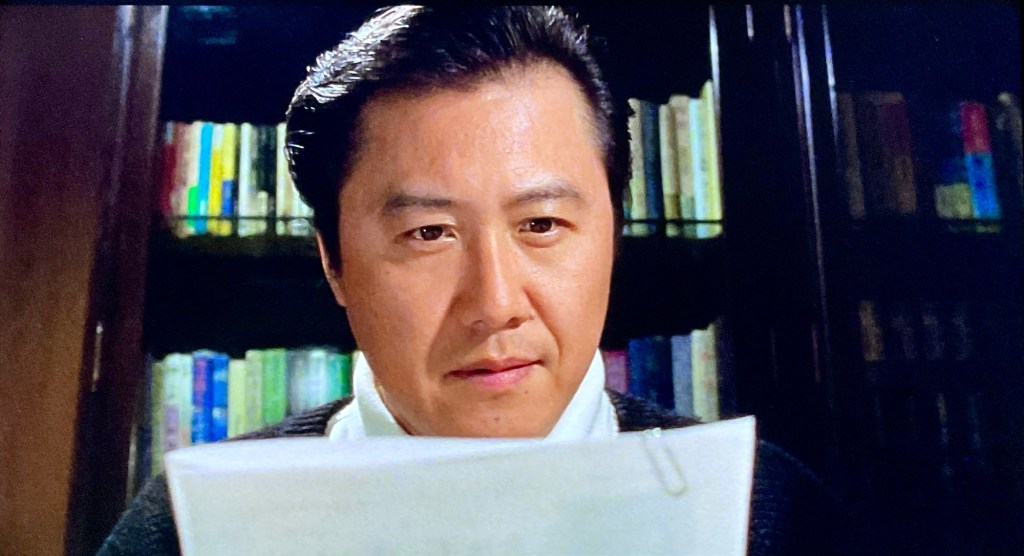
Shigeharu Aoyama (Ryo Ishibashi)

After looking over many women, he finally meets Asami (Eihi Shiina), whose exquisite delicateness intrigues Aoyama, and her quiet demeanour intrigues him, even though she is close in age to his son.

Asami and Aoyama slowly develop a friendship which blossoms into something more intimate, but after they make love for the first, Asami disappears and Aoyama starts an investigation to find her, but what he finds is that she may not have been telling him the entire truth…

The seemingly delicate Asami (Eihi Shiina)

All through this movie there is such a feeling of claustrophobia and discomfort that unlike many films gets right under your skin, as do most of Miike other films. The juxtaposition of moments of quiet beauty and subtle relationship building, combined with some of the shock moments (that I won’t reveal here) are truly amazing. The real trick here is that there are moments of intimacy that are filmed more like claustrophobia than closeness, and that adds to the unsettled nature of this new relationship between the main leads.

… maybe NOT so delicate…

Although Miike doesn’t make horror films per say, he is however a reluctant genre film director who has had horror cult status thrust upon him, which is why films like this, and his others like Visitors Q and his comic adaptation Ichi the Killer are such fascinating watches.

This story works so effectively as it doesn’t adhere to stereotypes, as one would expect from a film that didn’t get punched out of the Hollywood thriller cookie cutter. This film reminds me of the first time I read American Psycho by Brett Easton Ellis, the combination of subtle day-to-day suddenly flipped on its head. This is a movie that will stick with you for a long time after you watch it.

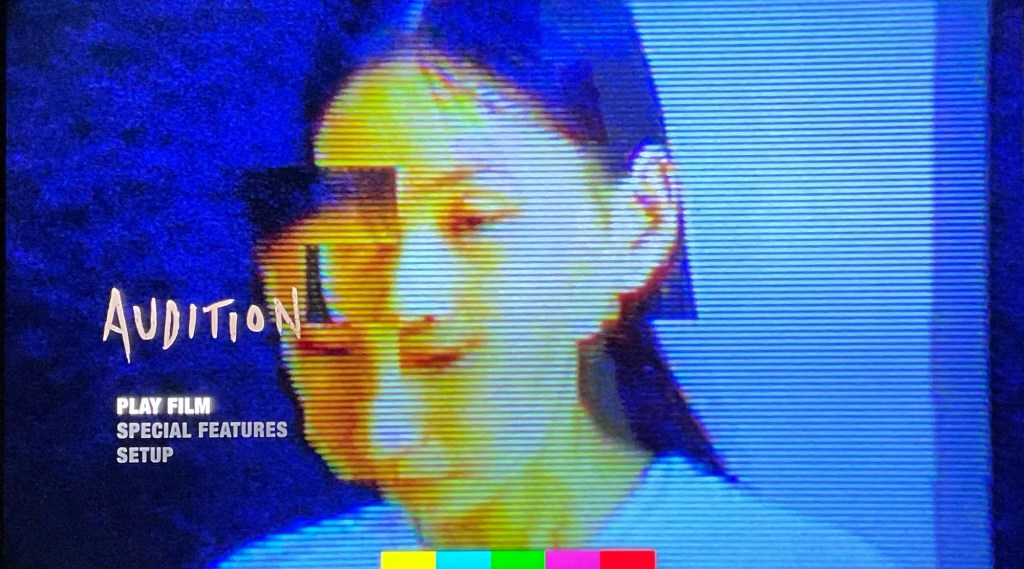
The menu screen to the Arrow Video Blu-ray

Disc: An absolute treasure trove of extras on this disc. I must also point out that the film can be watched with an introduction by Miike.

First, we have two commentaries, The first by director Takashi Miike and screenwriter Diasuke Tengan, and a second by Tom Mes. The first is in Japanese so it is subtitled and is enthusiastic and interesting. The second is performed by Mes, a writer who has written books about Miike’s career. It is interesting but less so that the aforementioned one. It is in English.

There is a series of interview with cast and crew: Takashi Miike, Ryo Ishibashi, Eisis Shiina, Renji Ishibashi and Ren Osugi. These interviews are each quite long and not like the ones you would get from American films with a few sound bytes of actors and directors massaging each other’s egos. These are fascinating insights into the film and each individuals history.

Damaged Romance; An Appreciation by Tony Ry looks both at Miike’s career and specifically the making of this film, and even the history of Japanese genre films.

There are two trailers for the film, one Japanese and the other the international one.

Another useless image gallery.

You’ll lose your head over this film.

RING (1998)

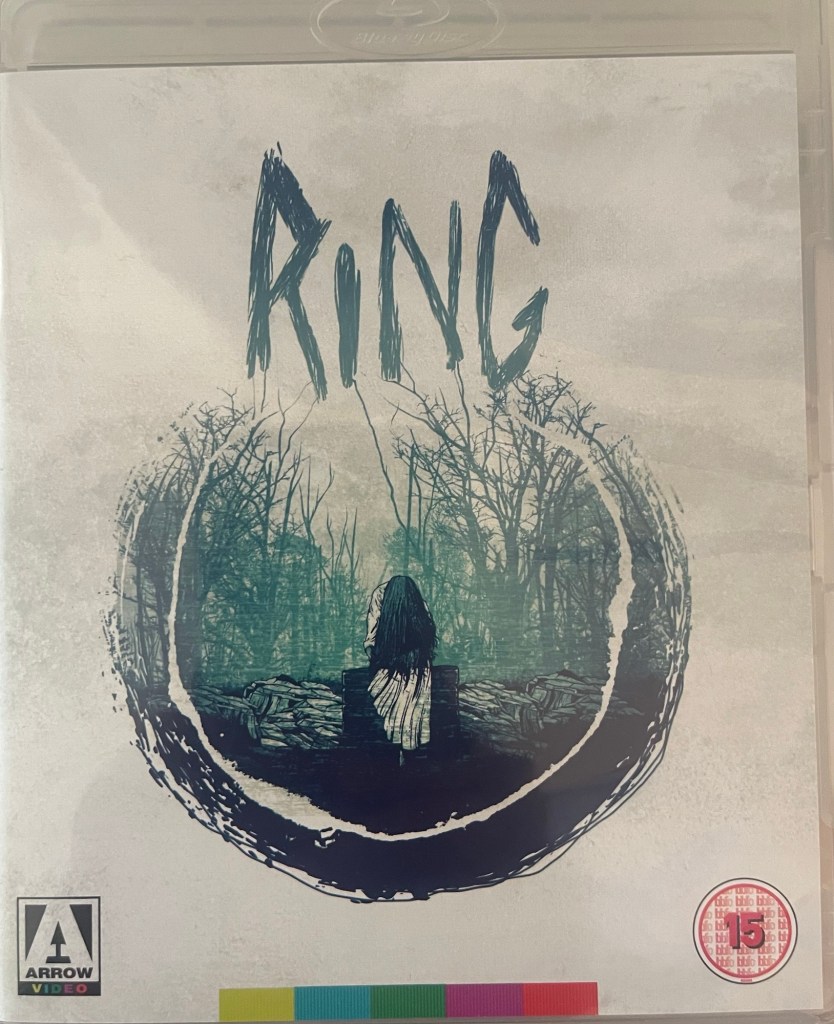
The cover to Arrow’s Ring Bluray, taken from The Ring Collection

RING (1998)

This is where you start with J-horror, right? This was the one that got us all involved in the late 90s. Ring is the parent that introduced us too all the Japanese horror we ended up craving: The Grudge, Dark Water, Pulse… not to mention directors like Takashi Miike, Hideo Nakata and their contemporaries.

Personally, I think a lot of the increased mainstream love of anime came from that time, as horror fans became more involved in the culture of various Asian countries, it leeched into the regular nerds and normal people via some good and some not so good remakes, and that trickled all the way through pop culture. I pretty much went think the popularity of Junji Ito relates directly to it.

That’s just my observation of the time.

(NB: I’m well aware that there were anime and manga fans before this time, heck I was one of them as I grew up loving Japanese cartoons, which is what they were called before the word ‘anime’ came to western culture properly, but my observations say the world seems to be more into it since 2000. Post COVID and lockdown even more so!

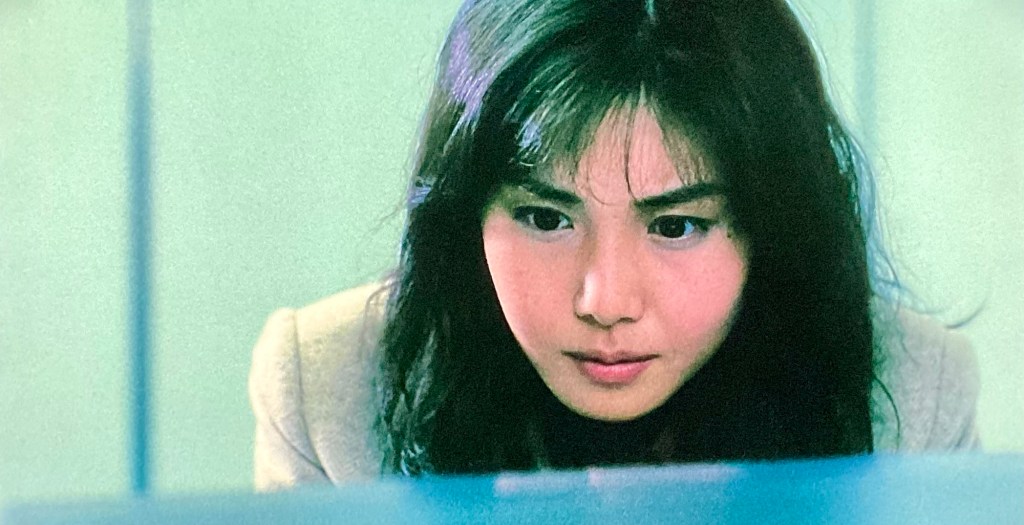
Asakawa (Nanako Matsishima)

Anyway, enough about my musings. Ring is based on the novel by Kôji Suzuki, with a screenplay by Hiroshi Takahashi. The film was directed by Hideo Nakata, who didn’t not want to be a horror film director, but basically became the spark that turned the west predominantly into j-horror fans.

Ring tells of journalist Reiko Asakawa (Nanako Matsushima), who has started a quite aggressive investigation into the urban myth of a VHS video tape that kills you 7 days after you first watch it, and warns you with a phone call where just the words ‘7days’ are whispered to you. This investigation is so urgent as it has just killed her niece, Tomoko (Yûko Takeuchi).

Asakawa eventually finds the tape, watches it and reveals that the myth may be true, and now she has 7 days to find a ‘cure’ to this spiritual virus that lies within the cassette. She shows he ex-husband the tape and the two of them research the footage on the tape in an attempt to find a cure… this attempt becomes more frantic when her young son also watches the tape.

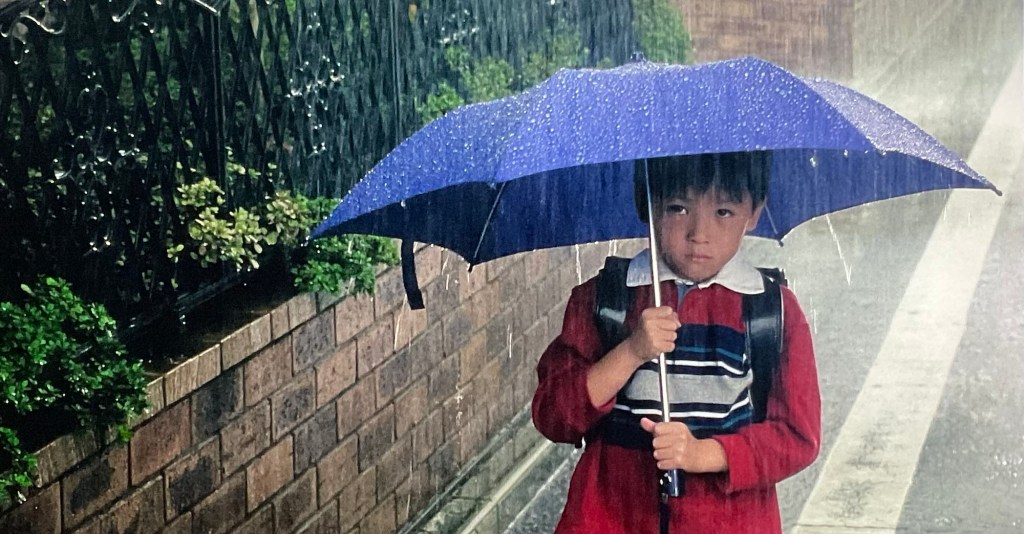
Asakawa’s son, Yôichi (Rikiya Ôtaka)

There research finds a connection to a psychic woman who died many years earlier, and the mystery of her daughter, Sadako (Rei Ino’o)…

There is no doubt that Hideo Nakata has created an almost perfect horror film with this movie. It is weirdly over-dramatic with its acting at times, and borders into pantomime but it somehow all sits correctly. When it came out it was such an extraordinarily different thing, seeing as how the 80s was all about the creation of franchises, a mistake cinema is repeating now with the desperation to find the next Marvel or Star Wars series, and the 90s was predominantly a pop culture wasteland, especially with horror seeing as how self-referential stories became the norm after the popularity of the Scream franchise.

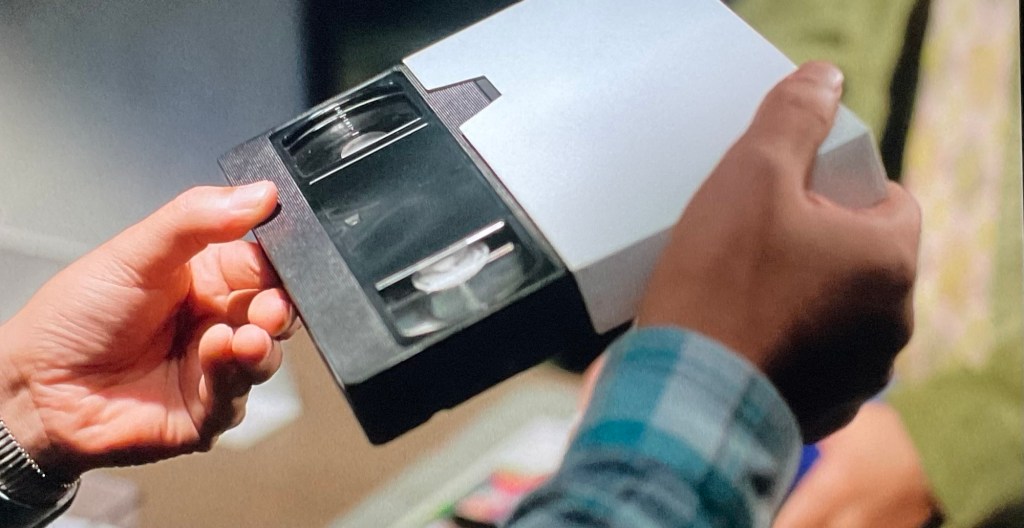
The tape!!

Basically I love this film. After being so disappointed how how awful horror had become in the 90s, this was like a breath of fresh air.

The story itself being a strange take on ‘hauntings’ and ‘curses’ was great, and probably due to the fact that Japan doesn’t have its creepies and crawlies based in Christianity like we still do in the west, judging by the popularity of the Conjuring universe. This added with, at the time, my lack of exposure to Japanese culture in general other than Robotech and Akira, just the different lifestyle, cities et cetera made it a visual feast. I actually name this film as being the thing that made me interested in watching Japanese architecture YouTube channels, especially the ‘tiny apartments’ ones.

I cant recommend this film enough. If you haven’t seen this Japanese ‘Ring’ but have seen the Gore Verbinski remake starring Naomi Watts, still give this a go as it is still a fantastic watch with a few differences in the story.

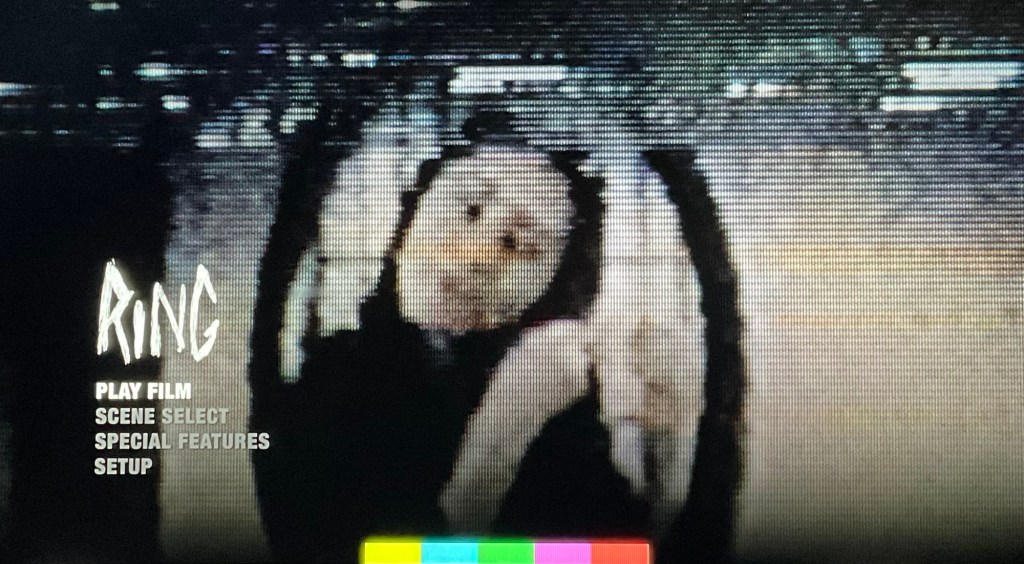
The menu screen to Arrow Video’s Ring

Disc: This Arrow video disc was available singularly, but also as a part of the Ring Trilogy box set which featured Ring, Ring 2 and Ring 0.

This disc has a bunch of cool extras on it though.

There is an Audio Commentary by David Kalat, author of J-Horror, The Definitive Guide to The Ring, The Grudge and Beyond. His is an enthusiastic commentary which reveals him to be very ‘in’ with the whole J-horror sub genre of horror, even though he has a disclaimer that he doesn’t speak Japanese so some of his pronunciations may be inaccurate.

The Ring Legacy looks at the entire scope of the Ring series, from the source material, to films, to video games and to the western remakes. A real fascinating inside into the entire scope of the series.

A Vicious Circle sees author and critic Kat Ellinger explore director Hideo Nakata’s career and the Rings influence on western horror.

Circumnavigating Ring is a video essay by Alexandra Heller-Nicolas, who here explores the evolution of the series.

Sadako’s Video is an opportunity for us, the film fan, to see the SADAKO video in its complete form… don’t forget to copy it and give it to someone else.

Three ring trailers including 2 for the Ring and Spiral double bill (which have far too groovy a soundtrack considering the subject matter), and a UK Trailer.

There’s also a useless image gallery.

The image everyone knows: Sadako revealed!!

This review was done with a copy of the Bluray of Ring taken from Arrow Video’s Ring Collection. Their was purchase from Arrow’s website