BLOOD THE LAST VAMPIRE (2009)

BLOOD THE LAST VAMPIRE (2009)
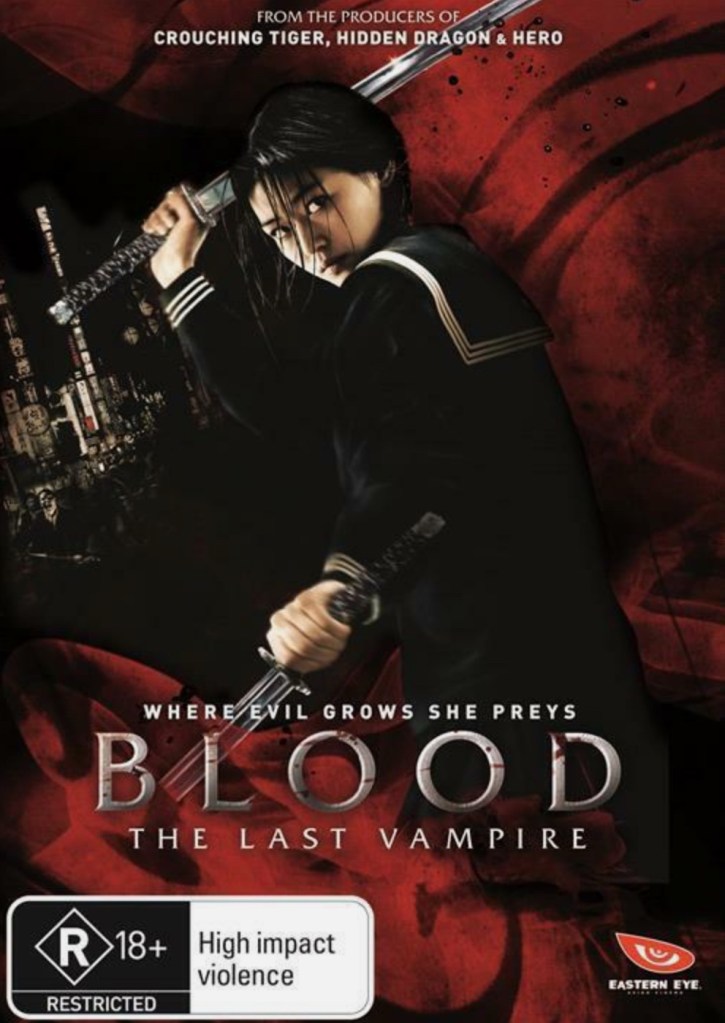
A scan of the DVD cover as my copy is an ex-rental with a crappy cover

I like the idea of animation being turned into live action. Every time I have heard of a cartoon from my youth or an anime being made into a live action feature I have jumped on board to see the result. Have I been disappointed? Maybe I should let films like He-man, Aeon Flux, Fat Albert, Underdog and The Flintstones live action films answer for me.

Yeah, that’s right. Not a great strike rate .

Blood The Last Vampire is based on the OVA (original video animation) of the same name that was released in 2000. It was originally supposed to be part one of three, but the other two never emerged. Since then though there have been manga, novels and an animated TV series, and now, a live action film.
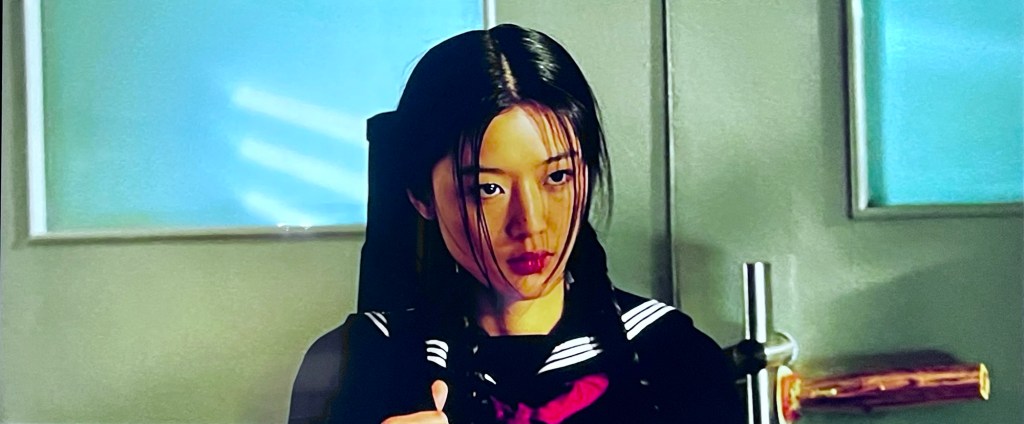
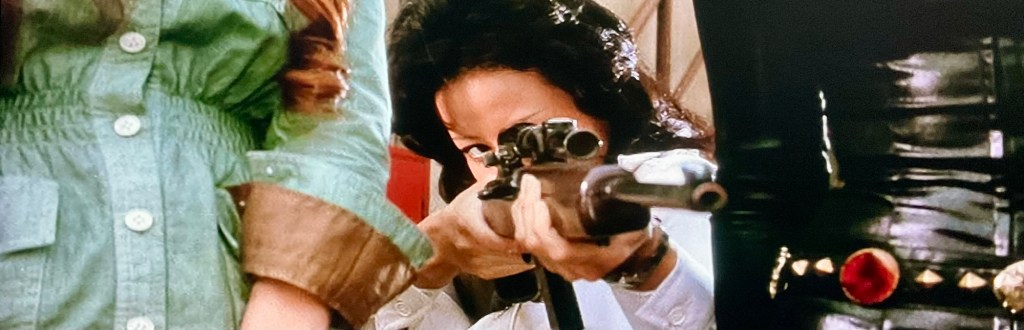
Gianni Juan as Saya

Blood the Last Vampire tells of Saya (Gianna Jun) who is a 400 year old vampire/human half breed dedicating her life to the destruction of vampires. She gets support from a secretive agency known only as The Council, who place her in situations where vampire infestations may be arising. Even though she appears to be in the Council’s employ, she is only there until she destroys the demon lord Onigen (Koyuki).

Her latest mission takes her to an American airbase in Japan, where, undercover as a student, she finds the plague greater than expected, and with the Council going through some, shall we say, management changes with extreme prejudice, she also finds herself ultimately alone, which is not what she needs when also has to protect Alice (Alison Miller), the daughter of one of the officers on the base.
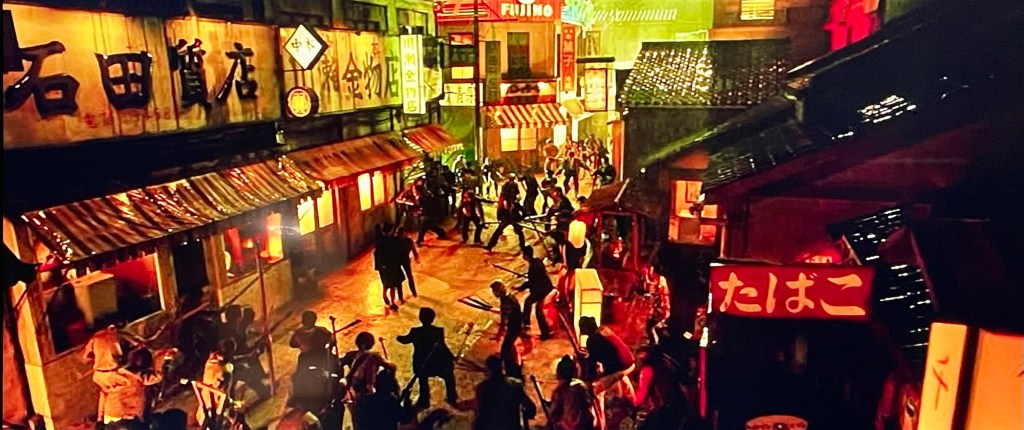
The vampire close in on Saya and Alice

The cast of this film is wonderful. Gianna Jun as Saya plays the part to a T and considering she does a lot of the wirework herself, kicks some serious arse! Special mentions also have to go to Koyuki, whose elegance brings something different to her major fight scene, and also to Colin Salmon, who seems to pop up everywhere in genre stuff of this period, and never really disappoints.
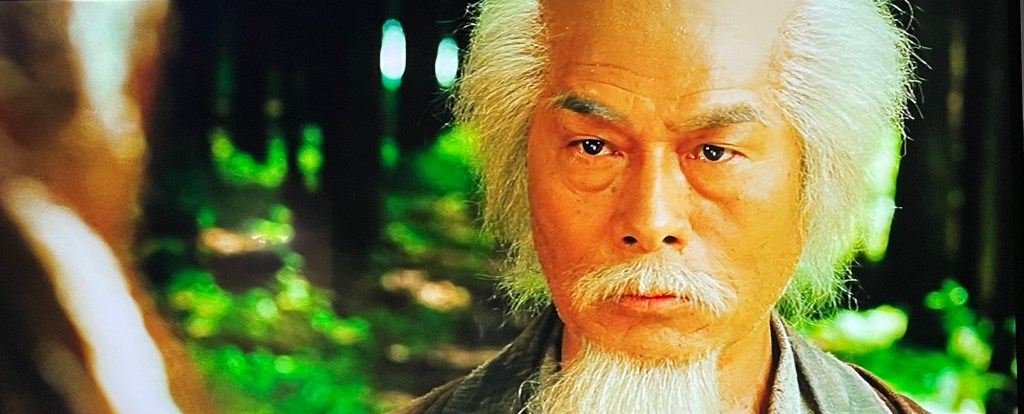
Standard issue master-styled character

The script on the other hand is average. It employs cliché after cliché, and for those familiar with American pop culture it is hard to find much original with this story, which appears to be a remix of Buffy the Vampire Slayer and the Marvel character Blade. Occasionally the script offers moments where it tries to get some kind of legitimacy with comparisons, disguised as references, to classical literature such as Mary Shelley’s Franksenstein and Lewis Carroll’s Alice’s Adventures Through the Looking Glass, though ultimately they feel tacked on. The script however isn’t the worst part of the film.

Tragically, the CGI in this is nothing short of deplorable. I not an opponent of CGI effects, and I enjoy it when CGI effects are employed well in a film, but it is not here. The blood effects are almost all CGI, and have solidity to them that looks completely unrealistic, especially as how a lot of the action sequence are in slow motion, which doesn’t hide its lack of realism. As a matter of fact, it makes it look even worse. If I were the filmmaker and my CGI blood looked this bad I would want to get rid of the blood scenes ASAP and would have played all the fighting in fast forward.

I’d like to say that the CGI demons are an improvement, but they are not. Badly designed and poorly executed CG make for a poor cinematic experience. I reckon even the CGI guys from Van Helsing would have laughed at this one. To say I may be being unfair because CGI has come so far, it doesn’t even stand up to films of the period.

In films like The Machine Girl and Tokyo Gore Police one can overlook the crappiness of the CGI as the subject matter doesn’t appear to be taking itself too seriously, but in this film it looks out of place and awkward. Rubber monster suits and physical arterial blood sprays would have been preferable.

So does Blood the Last Vampire change my opinion of the terrible cartoon to live action films we have so far seen? No it doesn’t, but not because it wasn’t a faithful adaptation or because it was treated with disrespect; the fault this time falls directly in the lap of the special effects department, and a little in the scriptwriters direction. What a shame!

Blood the Last Vampire is a great example of wonderful ideas executed poorly. I appreciate that this is a lower budgeted film, but I firmly believe that just because you can do something, doesn’t mean you should – did Jurassic Park teach us NOTHING?!? Just because these filmmakers had the ability to do effects digitally definitely doesn’t mean they should have, as those effects are what ultimately wreck the film.
The DVD menu

Extras: A few extras on this disc:

The Making of Blood covers the making of the film, mainly the physical effects and wirework. It doesn’t go to deep into the making of the film, but it does show the difficulties that can come from a stunt heavy film.  

In addition to a trailer for this film, there are also trailers for Tokyo Gore Police, Ichi, The Machine Girl, Ong Bak 2: The Beginning and Godzilla: Showa Classics.

Film: 4/10

Extras: 4/10

Rewatchability: 2/10
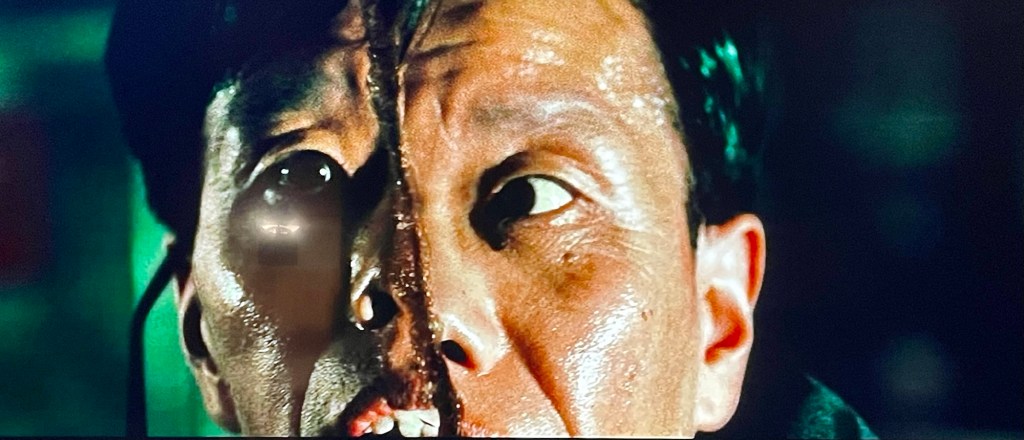
A vampire meets its maker

The DVD was purchased ex-rental from the now-closed VideoEzy Miranda
DARK WATER (2002)

DARK WATER (2002)

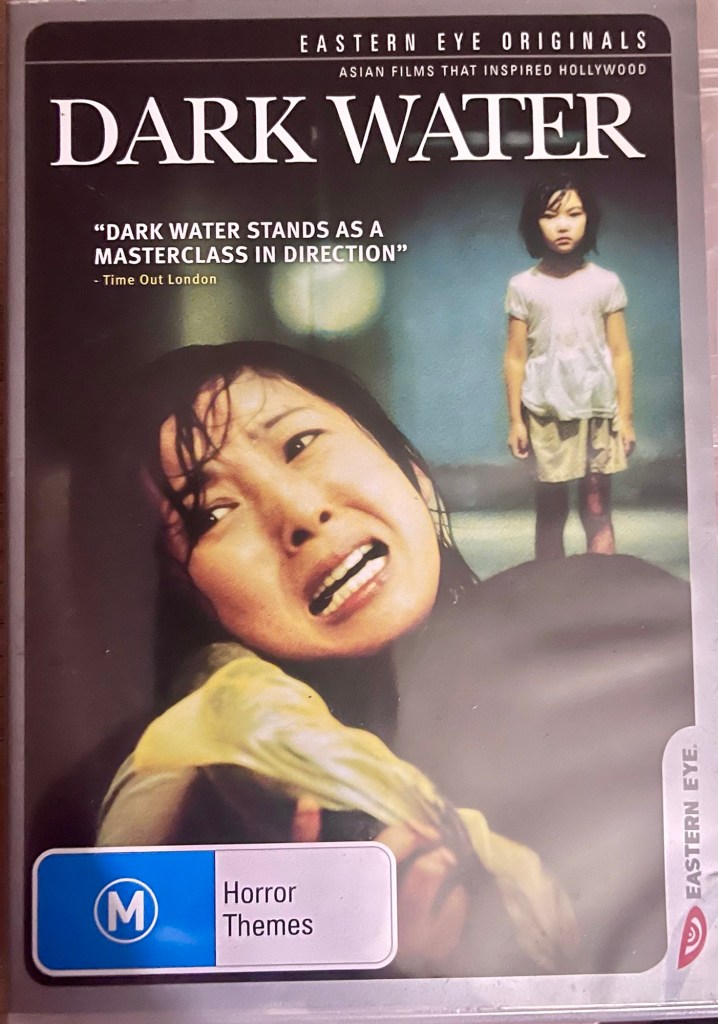
The Eastern Eye dvd of Dark Water

If you remember horror in the early 2000s, you remember one thing: j-horror.

Movies like Ring, Ju-on The Grudge and their many competitors and imitators and remakes flooded the western dvd and cinema market, making us finally aware that the scariest thing in the world is a 7 year old girl with wet black hair, when in actual fact it’s a 14 year old girl with an attitude.

Trust me.

Based on a book by Koji Suzuki, Dark Wayer was directed by Hideo Nakata, who directed Ring, Ring 2 and the western version of The Ring 2. This film could have very easily slipped into the series as it’s about a wet, trapped spirit of a young girl… they could have even named it Bore-Ring… but perhaps that is revealing my opinion of the film a bit too early.

Matsubara (Hitomi Kuroki) ponders the rain

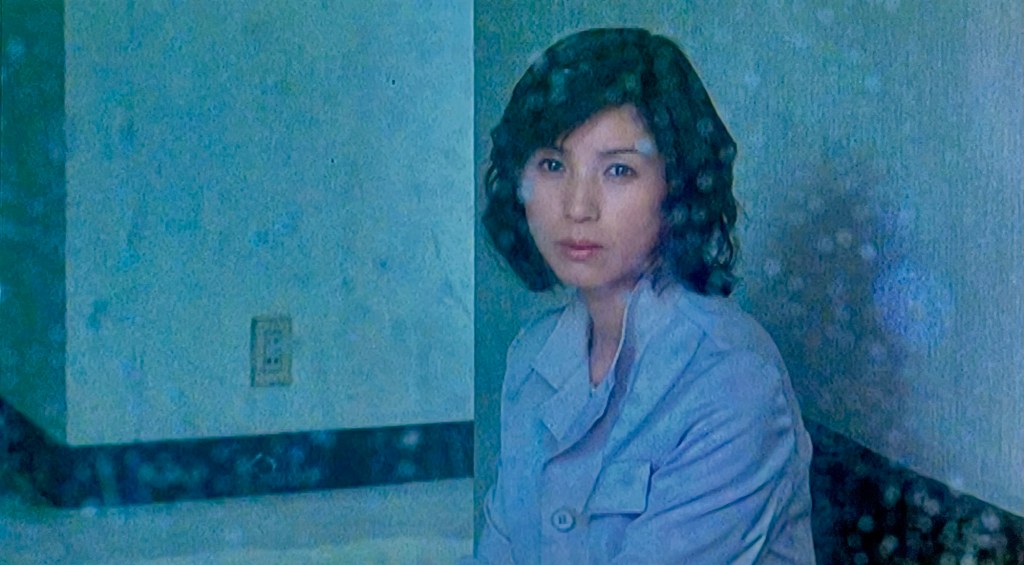
Bore-Ring… I’m sorry, Dark Water starts by introducing us to Yoshimi Matsubara (Hitomi Kuroki), recently divorced and a former sufferer of some PTSD issues due to very violent books she had been proof-reading for a publishing company.

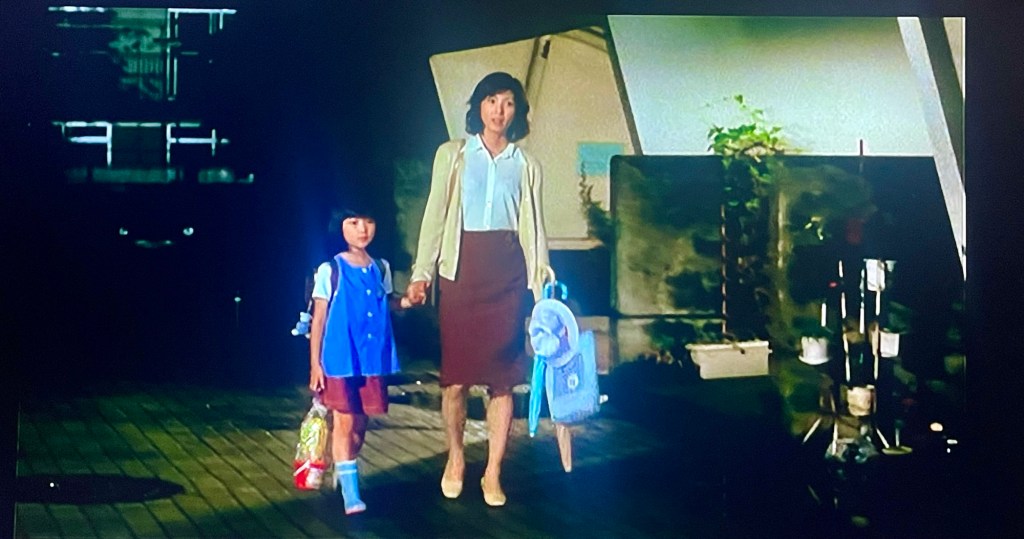
Matsubara and her daughter Ikuko (Rion Kanno)

Her and her daughter, Ikuko (Rio Kanno), move into a fairly awful apartment block, with a disinterested apartment manager that is in desperate need of some love, but there is something odd about their home.

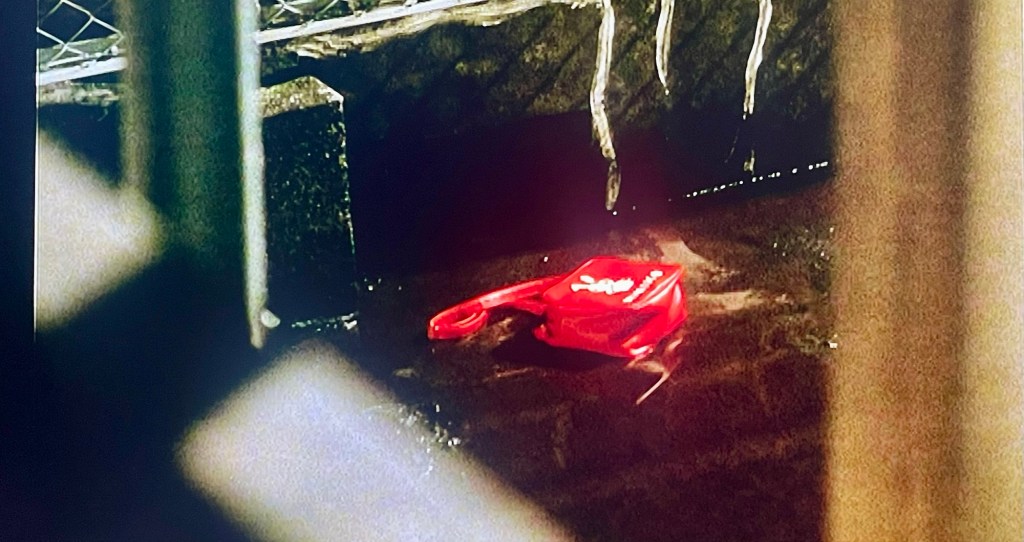
Water seems to be perpetually leaking from the roof and a fairly ominous stain is creeping across the ceiling in one of the rooms, and more and more, an sense of something strange in the apartment starts to become more apparent, which starts with Ikuko finding a child’s handbag/ backpack.

What is the secret of the water that constantly seems to be in the apartment block, and why does Matsubara seem to be at the corner of the mystery? Is there a presence there, or is her poor mental health to blame?

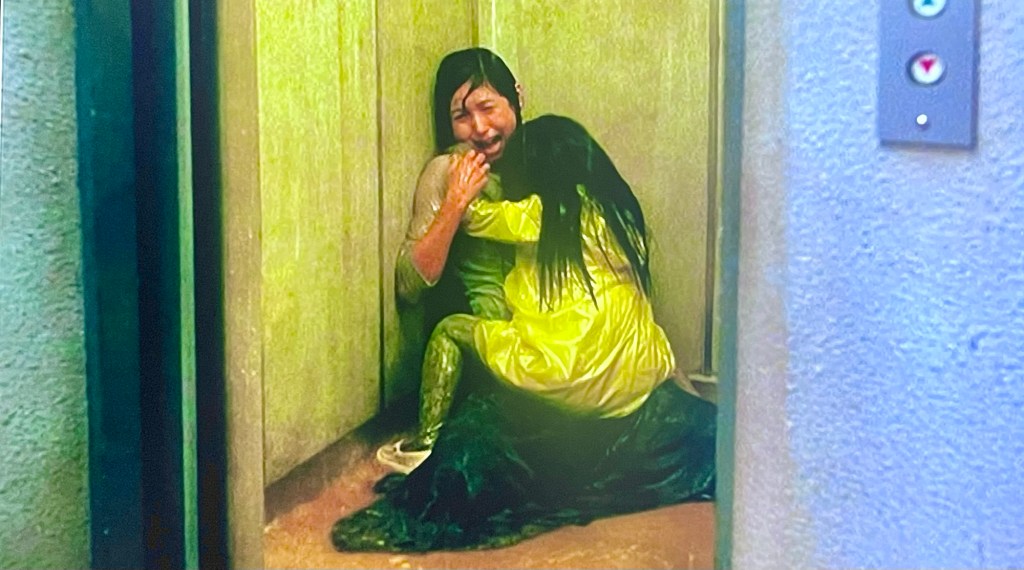
Introducing yet another ‘scary’ little ghost girl!

Essentially this is a well made as any of these Japanese films of this era, and honestly, when it first came out I was desperate to grab anything from Madman’s Eastern Eye brand, a desperation that Hollywood must have felt as there is an entirely forgettable western remake directed by Walter Salles, starring Jennifer Connolly, Tim Roth, John C. Reilly and Pete Postlethwaite which is so forgettable I actually falsely remembered that it was Demi Moore who played the Jennifer Connolly role, and when you consider my utter love of Jennifer Connelly you’ll understand just how unbearable that film was!

Now this film is well acted by the cast, and honestly the state of disrepair that the apartment block reveals a Japan that I never knew existed as everything always seems either very new and clean, or traditional and well-kept, but the building is almost a brutalist blight on the opinion that Japan presents itself in its media. I found that to be strange and exciting and does actually really set the tone of being wet and moist and clammy.

This is all supposed to reflect the themes of neglect and abandonment of a child and how it can effect their opinion upon the outside world, but the film moves at a snail’s pace, and I am one for a slow and deliberate horror movie, but it also has to be entertaining.

The problem with this film is it’s like an afterschool special version of a Japanese horror film, or even a Hallmark video version. It feels forced and schmatlzy in its tale and in the epilogue I found myself rolling my eyes and wondering if I should just go outside for a walk instead of enduring this.

A repeat watch of and of the Grudge or Ring films would have been a better option than watching this.

The menu screen for the Dark Water DVD

Extras:

Only trailers for Dark Water, Montage, Grudge, Volcano High, Yojimbo, Infernal Affairs and Seven Samurai.

Film: 3/10

Extras: 2/10

Rewatchability: 4/10

The bag that starts the wholemshebang.

This DVD was purchased AGES ago from Video Ezy

TALES OF THE RAT FINK (2006)

TALES OF THE RAT FINK (2006)

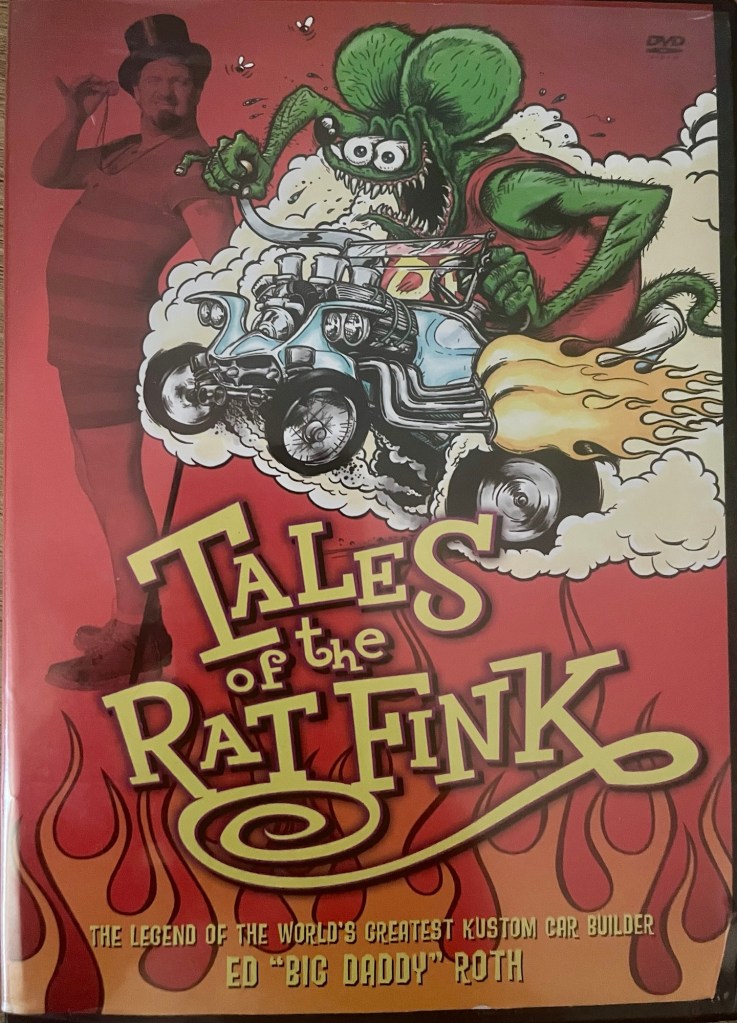
The cover to the DVD Tales of the Rat Fink

I have a weird relationship with cars. I fascinated by the design, the ideas and the mechanics of them, as in, the science of the mechanics, but I don’t care what I drive as I just see it as a form of transportation.

I like cars in media though: I like video games that have cars in them, I like cool cars in comics and other media, love me a good movie that has a cool car or cars in them (which is where the 2Fast 2February car in cinema celebration came from) and I especially loved the cool model kits of Big Daddy Roth’s Hot Rods from Revell (I think, or Monogram) when I was a kid.

This documentary came out in 2006, and I believe I read about it in an article lowbrow art magazine called Juxtapoz, which used to be really cool but devolved into started art wankership.

NB. If it was not Juztapoz it may have been one of its imitators/ competitors.

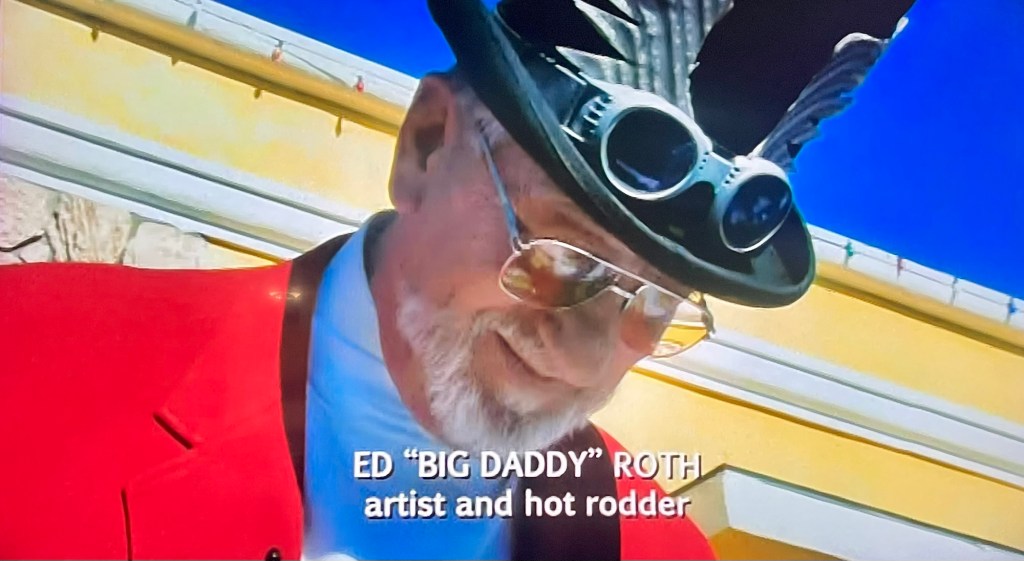
The man himself

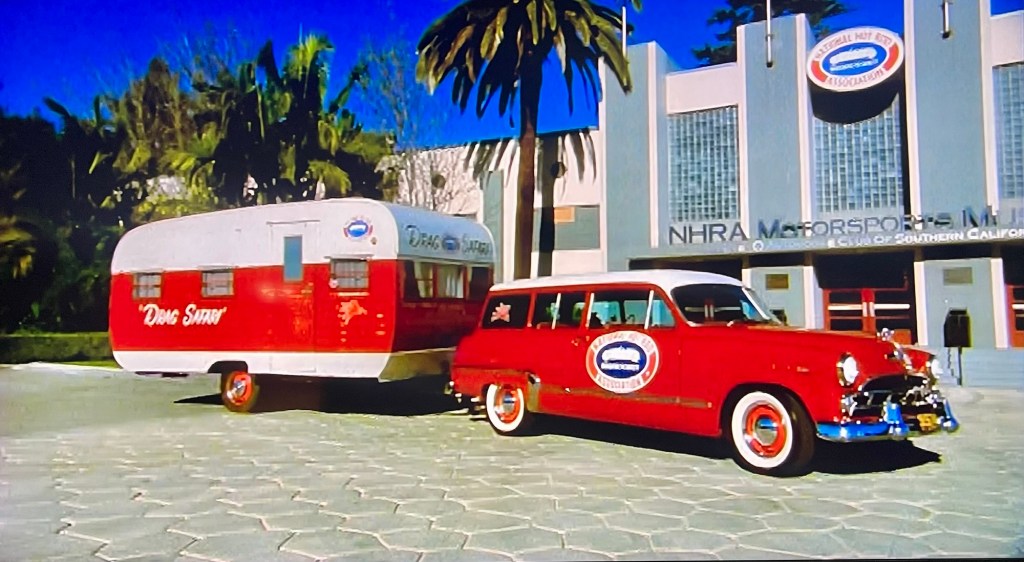
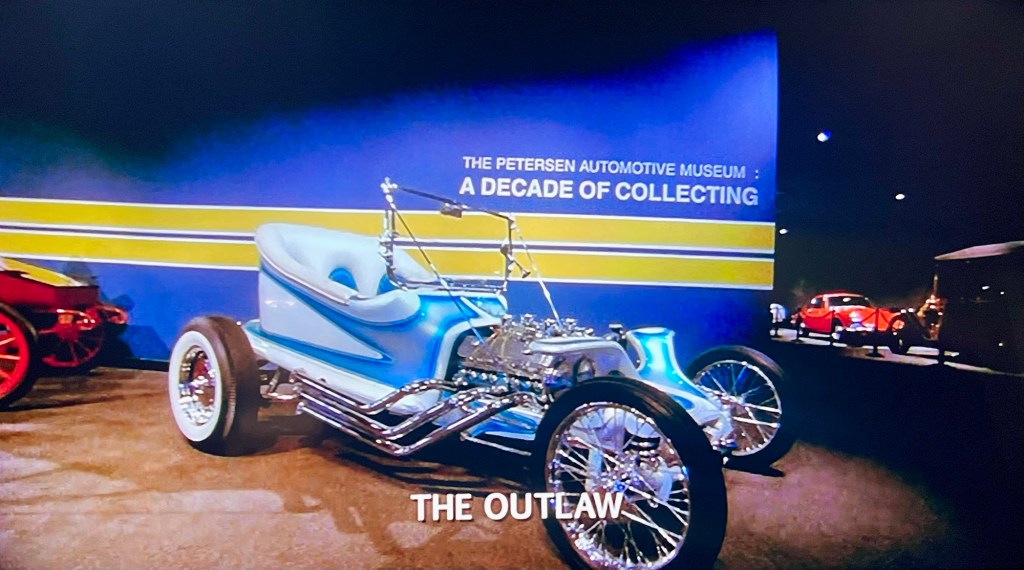
Now if you don’t know who Ed ‘Big Daddy’ Roth is, let me get you up to speed. Ed Roth was born in 1932, and after studying engineering and a short stint in the airforce, discovered the joy of fibreglassing, which, in combination with that degree engineering, and his love of cartoon art, made him create some of the most off-the-wall hot rods ever seen. These were not rat rods that had been stripped down to their bare necessities to make them go faster, no, these were airbrushed works of art, that are still kept in an auto museum to this day!

A stunning matching car and caravan

This is a documentary about his life and his art, hosted by his best known creation, Rat Fink, and it is a documentary with a big difference: all the cars are given voices and personalities and tell the story of Roth’s life in that manner. There is also some fun animations of both him and his characters as interstitials between scenes.

Some of the people who play the voices of the cars are the Smothers Brothers, Ann-Margaret, Billy Gibson from ZZ Top, Matt Groening (creator of the Simpsons), Jay Leno and even Stone Cold Steve Austin but best of all, John Goodman plays the voice of the ghost of Roth, telling his own life story from the afterlife.

All car fans know The Outlaw

It’s an interesting take on a biopic, but seeing as how Roth’s life and creations were interesting, it’s appropriate, and I can’t really imagine many other people having their life story told in such a fashion.

It’s a fun doco both for automobile fans and for fans of pop culture and one of the people who really started the legitimisation of adults liking product that may be traditionally kids stuff. I mean, the man basically invested the graphic T-shirt, so that’s a cornerstone right there.

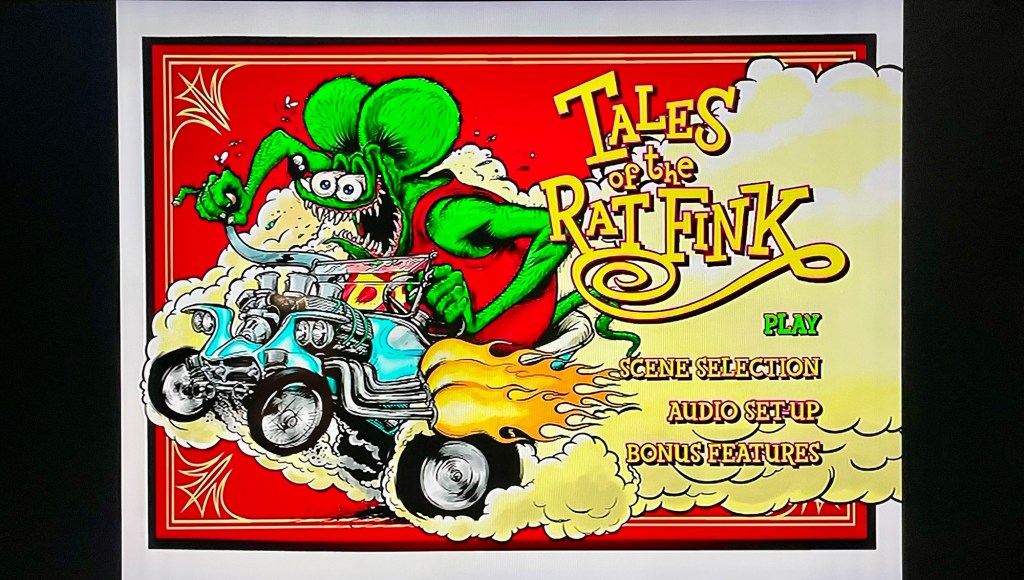
The menu screen for the DVD

Extras: There is a decent quantity of extras on this DVD:

Big Daddy Lives! A Rare Interview with Ed ‘Big Daddy’ Roth is an interesting archival interview which looks at why he never resold any of his vehicles and his car creation process.

Rat Fink Reunion – Painting Jam with Ed Roth and Von Dutch is a video from 1983 of Roth and Von Dutch… remember those caps everyone was wearing a few years ago… doing some pinstriping on a vehicle together.

Big Daddy’s Garage – Virtual Art Gallery looks at his vehicles, T-shirt designs, comics and art from the book ‘Rat Fink’s Revenge’ where various artists reimagined Rat Fink in their own vision.

Interview with Director Ron Mann is a clever tip of the hat to the film as Mann is interviews as a broken down car in a junk heap. He briefly looks at the whys of making a documentary on this pop cultural icon.

The Deleted Scene is a niche of the commercially produced products made of Roth’s art. I honestly don’t know why they would have removed it except it targets Mickey Mouse, the character Rat Fink parodies.

There’s also a Theatrical Trailer and The Sadies music video for their song, Horseshoe, which is used in the film.

Film: 8/10

Extras: 6/10

Rewatchability: 10/10

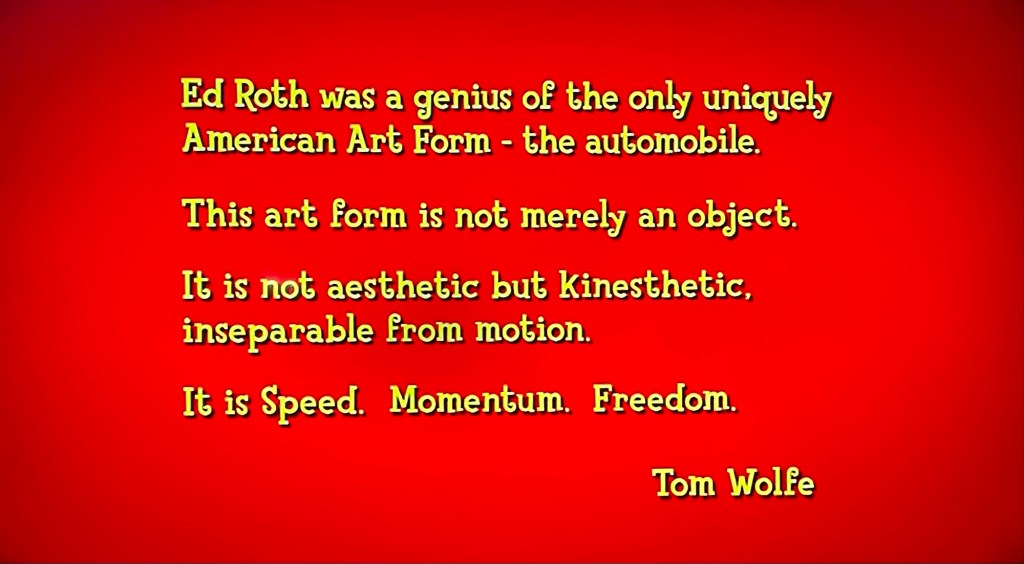
A fantastic quote about Roth that opens the film

This DVD was purchased from Amazon

THE PINKY VIOLENCE COLLECTION

THE PINKY VIOLENCE COLLECTION

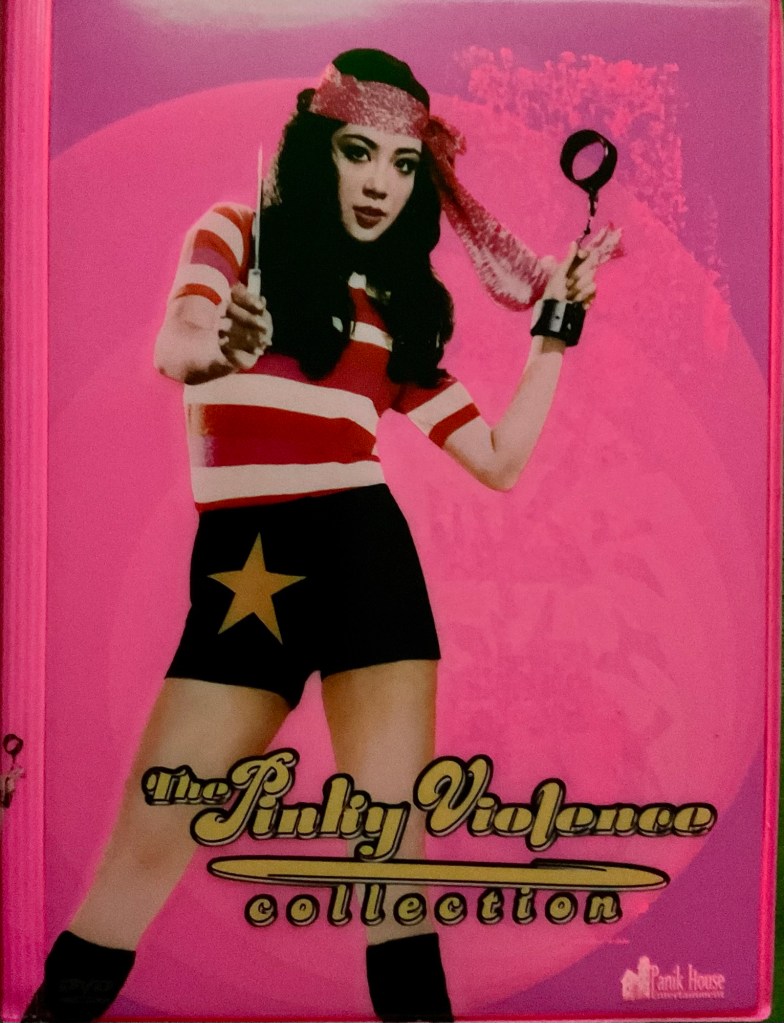
The cover to Panik House’s DVD collection

In 1970, many of the Japanese movie studios were moving out of entertainment and were taking their fortunes from investments in real estate. Some studios continued to make films, but of the ‘Pink’ variety, softcore porno with touches of either tenderness, S and M, or both! Television was taking a huge bite out of the movie producer’s wallet, so some studios decided it was time to make cinema where you could see things that were not able to be made for television.

The Pinky Violence Collection

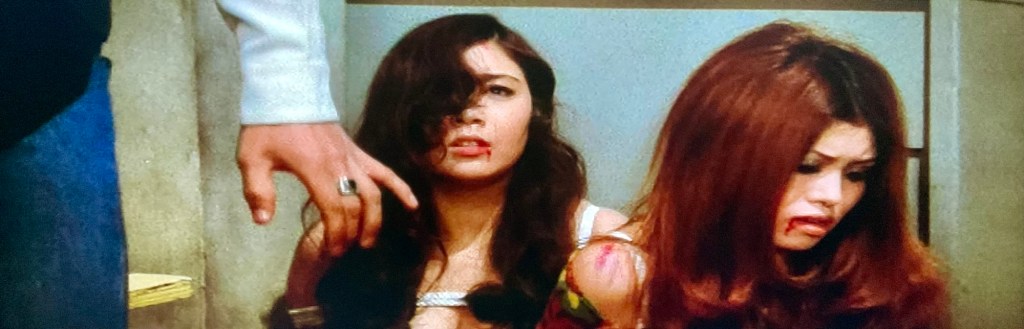
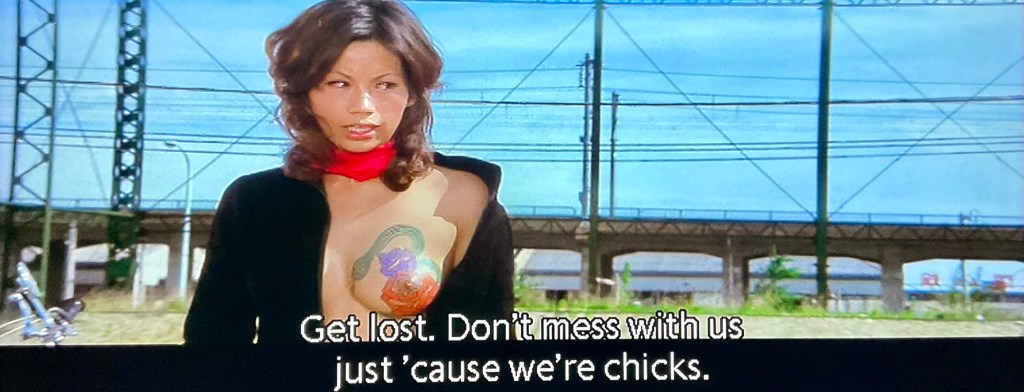
These films were like the American gang films of the sixties and seventies, and with their combination of violence and soft porn, were nicknamed Pinky Violence. These ‘Pinky Violence’ films featured bad girls, ‘sukeban’, who used violence and sex to get what they wanted, and what they wanted was money and power…and to be free of the bindings of men. Panik House have pulled out all the stops with this spectacularly packaged 4 DVD set of films in The Pinky Violence Collection, which features four of Toei Studios entries into the genre.

Delinquent Girl Boss: Worthless to Confessaka Zubeko Bancho: Zange No Neuchi Mo Nai, directed by Kazuhiko Yamaguchi is about Rika (Reiko Oshida) who, after leaving a Reform School, visits the father of a school mate who owns a garage that the local Yakuza are trying to take over.

After a chance encounter with another ex-classmate, this wanna be girl gangster ends up on a collision course with the Yakuza…and a violent outcome.

Girl Boss Guerilla aka Sukeban Gerira, directed by cult movie legend Norifumi Suzuki tells the tale of the all girl biker gang, The Red Helmet Gang, led by Sachiko (Miko Sugimoto) who move into Kyoto to take over all the girl gangs there.

Once that mission is accomplished they take on various money making schemes until they fall afoul of a local Yakuza, and with help from local girl gang legend, Nami (Reiko Ike) they do whatever they can to take him and his henchmen down.

Terrifying Girl’s High School: Lynch Law Classroom aka Kyofu Joshikoko: Boko Rinchi Kyoshitsu, again directed by Norifumi Suzuki is the story of new student, Noriko (Miki Sugimoto) and her friends trying to survive in a tough all girls school controlled by a gang of mask wearing bullies and a dishonest administration, all being overseen by a corrupt politician.

When they are approached by a blackmailer to bring down the politician, they get help from local Yakuza girl, Maki (Reiko Ike).

Criminal Woman: Killing Melody aka Zenka Onna: Koroshi-bushi, directed by Atsushi Mihori, has us watching Maki (Reiko Ike), who’s father, after faithfully serving the local Yakuza, is murdered and she herself raped when he is deemed useless to the gang.

She tries to kill the Yakuza leader, but is caught and thrown into prison, where she forms a gang (including Miki Sugimoto) who will help her bring down the Yakuza by setting up a gang war, and when the two gangs start to pick each other off, she will be able to get closer to her victim.

If they keep the sort of quality in this package, and with the Elder Sister Series releases, America’s Panik House is looking like a future leader of Japanese cult films on DVD. This sort of collection is the stuff that would give Quentin Tarantino, and his love of seventies exploitation cinema, a wet dream. Many parallels can be made with these films and those of the blaxploitation genre, specifically Pam Grier’s entries, and the Russ Meyer influence (with men being dumb and strong but the women holding all the power), especially Faster Pussycat! Kill! Kill! are obvious. These films are full of beautiful girls, baring their breasts and beating the crap out of each other… what else could you want from exploitation films?

Extras:

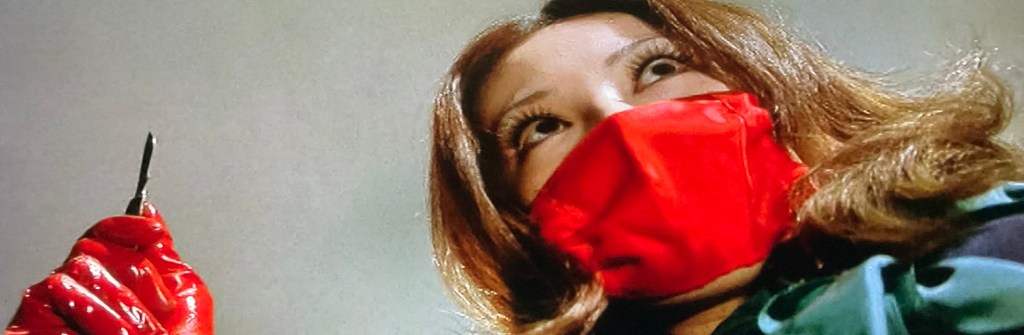
The packaging of this set from Panik House is so unique; it should be classed as a special feature itself. The four films are collected in an unusual, fluorescent vinyl package with a knife wielding Sukeban on the cover, who, with the current interest in kogal fashions, wouldn’t look out of place in a Gwen Stefani film clip. In actual fact, the influence of the fashions these girls wore is apparent in many other genres, from pop music to cartoon characters.

There is an excellent 24 page booklet in this set, written by the author of Outlaw Masters of Japanese Film, Chris D, which gives a brief, but complete history of the origins of Pinky Violence.

Each disc has a commentary by an aficionado of Asian cinema: Girl Boss Guerilla is done by Panik House President Matt Kennedy and Asian Cult Cinema magazine columnist Wyatt Doyle, Criminal Woman: Killing Melody is by film critics Andy Klein and Wade Major, which leaves Chris D to do the commentary for Terrifying Girls High School: Lynch Law Classroom and Delinquent Girl Boss: Worthless to Confess.

All the discs have a variety of smaller extras such as picture and poster galleries, trailers, production notes and cast and crew biographies.

This collection also features a CD with songs performed by Pinky Violence star Reiko Ike. It is basically lounge music with lyrics provided by a singer who has been recorded at the peak of orgasm. It’s funky, and occasionally amusing.

There is a sticker feature the image from the front of the packaging.

Average of 4 films: 6/10

Extras: 10/10

Rewatchability: 6/10

This box set was purchased from Amazon about 20 years ago.

THE PURGE (2013)

THE PURGE (2013)

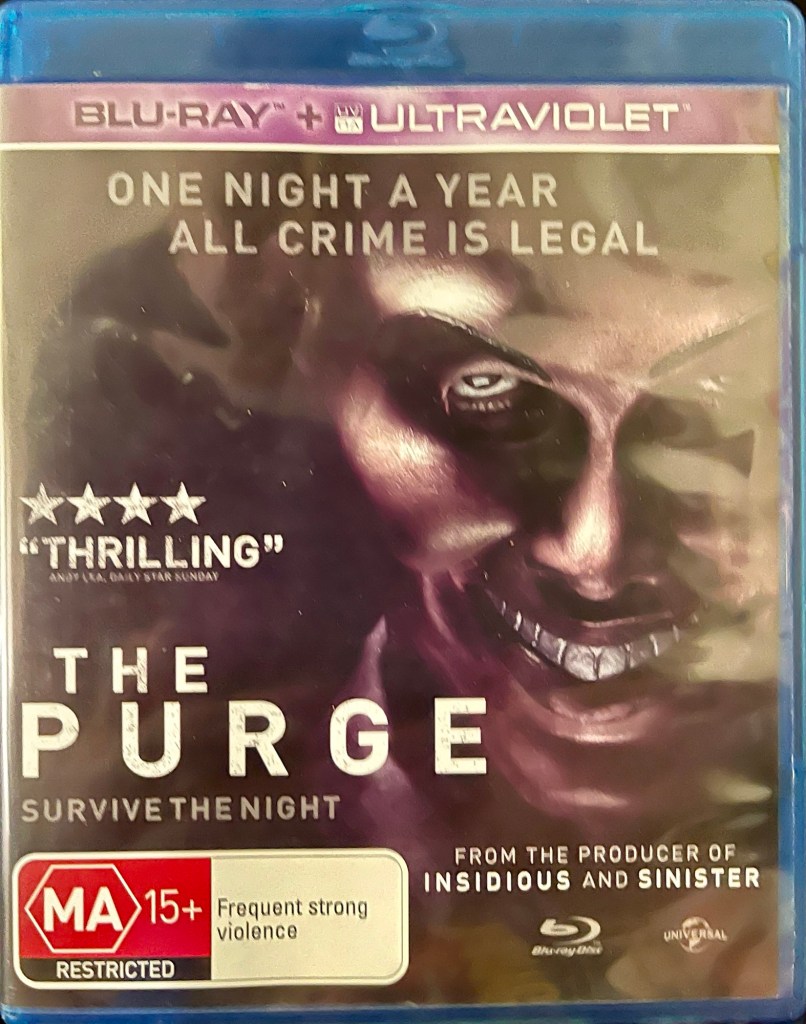
The Australian Bluray release of The Purge

Film: I always find it funny when you observe a piece of science fiction pop culture after the date that that sci-fi piece takes place. I still find it hilarious that the science fiction magazine 2000AD still calls itself that, but branding is a strong and important part of any pop culture, unfortunately, and it restricts creativity at its very source.

The Purge was written and directed by James DeMonaco, who wrote the screenplay for the remake of Assault on Precinct 13 in 2005, another film, like most thrillers in the vein of this, that sees people banding together in trapped environment against something trying to get inside.

Remember the Alamo, indeed!

Our plot involves James Sandin (Ethan Hawke) and his family, wife Mary (Lena Healey), daughter Zoey (Adelaide Kane) and son Charlie (Max Burkholder) on the most celebrated American night of the year, the night of The Purge. The Purge is one night a year where no crime will be punished for: murder, assault, robbery… it’s all on the cards and the police will do nothing about it.

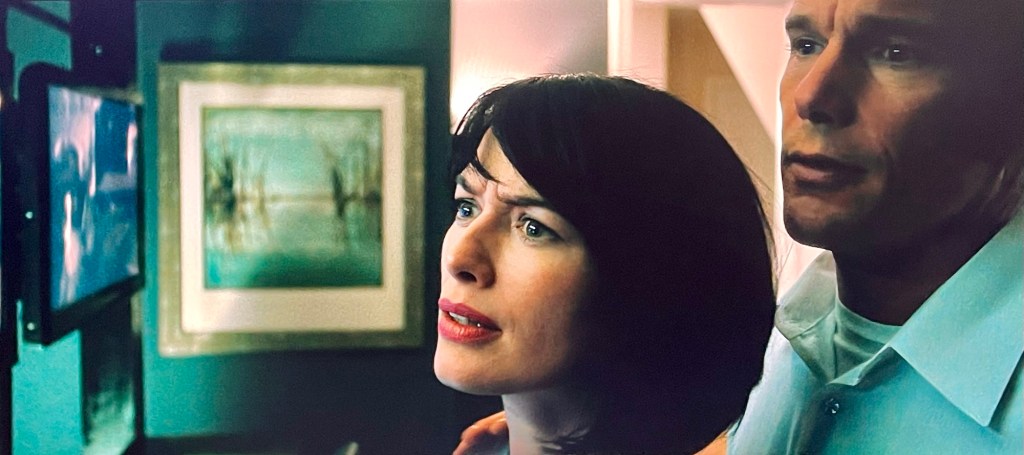
Hawke and Headey

James loves the Purge as being a security contractor, he has made a lot of money from many people, including his own gated neighbourhood, by selling them state-of-the-art security systems.

The family are well prepared for the Purge except for two things that James does not expect. The first is 16 year old Zoey’s boyfriend, Henry (Tony Oller), an 18 year old young man who James doesn’t not approve of, has hidden himself within the house… for nefarious means on the night when no crime will be punished? Maybe.

The second issue is that Charlie observes a vagrant (Edwin Hodge) being chased through the streets by a gang led by an unnamed leader (Rhys Wakefield) who have decided to use the Purge to cleans the city of undesirables, and lets him into the house to save him as Charlie doesn’t believe the Purge is a good idea. The vagrant immediately disappears within the mansions walls.

The gang descends upon the the Sandin’s house

It’s an even worse idea when the gang descends upon the house with an ultimatum: give up the vagrant or the whole family pays the price.

As the Sandin’s are attacked from both inside and out, the question will be asked: who will survive the night?

The Purge is a violent sci-fi horror film released in 2013 that takes place in 2022… yep, three years prior to this review being written… and even though we thankfully have not reached the point where a yearly violent purge is how we sort out the world’s problems, I think the elements of society not being nice to itself for monetary reasons is sad.

There is some exciting things about this film that really thrilled me. One is that the people attacking the house and the vagrant have no character name. The fact that, like in real life, people move in and out of your life and do things to you and around you but remain nameless. That anonymity makes the story so much more terrifying; people having their lives assaulted for no reason other than a governmental edict.

There’s a great tale of the difference between the haves and the have-nots and just how even the haves feel like have-nots in comparison to successful people.

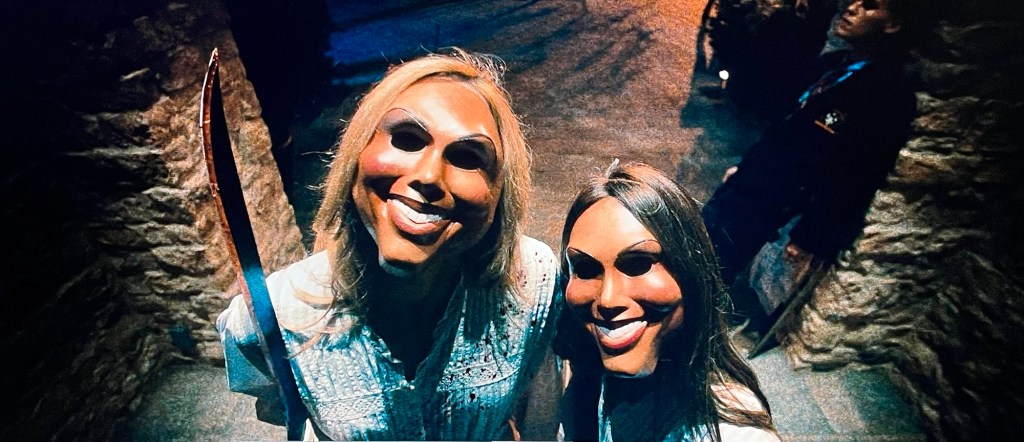
The masks are enormously effective.

This film certainly riffs on ideas presented in The Strangers from 2008 which borrowed a bit from the French films Ils aka Them from 2006. The difference is that those films had terrifying elements as there was no reason for the attacks, which is an awful thing to encounter. I think what makes The Purge worse is that citizens are being given permission to commit these assaults, which suggests a corrupt government that no longer works for the people.

The casting is excellent as well. Hawk and Headey make for a great couple, and honestly I love everything Headey does anyway so I may be prejudiced on that point. Kane and Burkholder are pretty good too, even though Kane feels like weebish eye-candy with her school uniform and Burkholder suffers a little of annoying child syndrome. The real heart of the piece though is Wakefield as the unnamed leader of the gang: self-important, self-justified, arrogant and with a mullet that lends legitimacy to the world worst haircut, he steals every scene he is in.

The story is deliberately told and has a great pace and the violence, even though you know it’s coming, is still surprising when it happens. I found the film a blast to watch and I look forward to getting stuck into the sequels which are going to be awesome, right?

Right?

The Bluray menu screen

Extras: Only one little pisspoor extra on this disc, which is a making of called ‘Surviving the Night: The Making of The Purge’. Its brief but does explain the origins of the story, but it’s mainly a fluff piece.

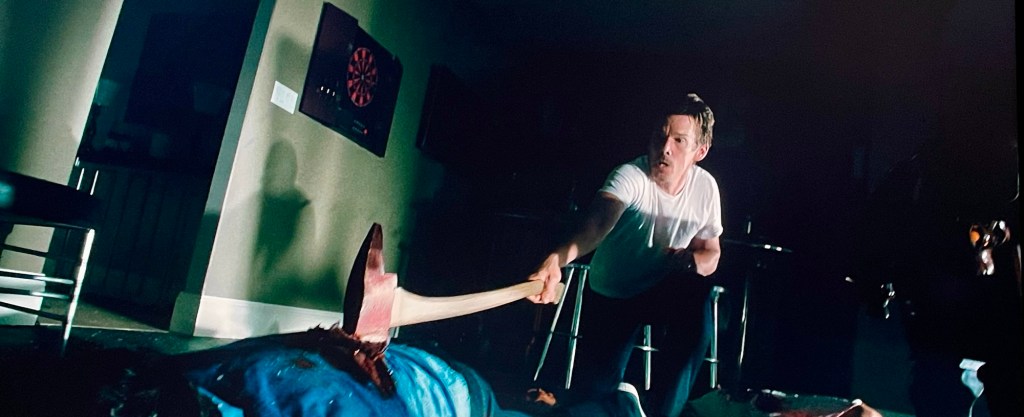
Hawke hacks a home invader

Film: 8/10

Extras: 2/10

Rewatchability: 8/10

This Bluray was purchased from JB Hifi

Imaginary (2024)

IMAGINARY (2024)

The cover to the Australia DVD release.

I think most people had an imaginary friend when they were children. I know I had one, though apparently mine was a different experience to most. I had my imaginary friend from the ages of 13 to 16, and instead of being an elf or a teddy bear, mine was a 27 year old blonde Bulgarian single mother of two with a voracious sexual appetite.

… but enough about me and teenage fantastical and onto the fantasies of writer and director of Imaginary, Jeff Wadlow, the director who also gave us the perfectly average but forgettable Truth or Dare from 2018 and a slasher from 2005 called cry_wolf, mostly forgotten except for the fact it starred Jon Bon Jovi as an educator.

It also had my then-horror movie crush Lindy Booth.

DeWanda Wise as Jessica

Imaginary starts with children’s author Jessica Barnes (DeWanda Wise) having a nightmare about a giant spider perusing her through a house, ironically in a scene similar to a children’s book she has written called Molly Millipede and the Blue Door.
She awakes with her partner, Max (Tom Payne) and they make the decision to move a few days early back to her childhood house, with his two daughters, Taylor (Taegan Burns) and Alice (Pyper Braun), the house now vacated after her father was admitted to an aged care facility.

Chauncey

Max’s life has had some tragedy as well as his former partner has been removed from society for some mental issues, including hurting the younger daughter.

Of course, being a new parent to the girls, Jessica has trouble connecting with teenage Taylor, who also won’t let her break down the walls with the her little sister, try though she might.

Soon after moving in, Alice and Jessica engage in a game of hide and seek, during which, Alice finds a teddy bear abandoned in a hidden room in the basement, which she quickly adopts.

Jess’s Dad, Ben (Samuel Salary)

Alice and the bear, who according to Alice calls himself ‘Chauncey’, become fast friends, as any child with a plush toy would, but very soon Chauncey gives Alice a list of things to do, a list of very specific things that have to be done… but why? What are these tasks in aid of… and why are some of them destructive, even self-destructive?

Unfortunately Imaginary is a great name for this film, as its entertainment value, its acting quality, its character’s likability… all imaginary. I love a film that has an imaginary friend cause some kind of terror to the family, even though each of these films has the same stuff in it like childhood trauma, a blended family, a new house, a young child who feels disenfranchised for what ever reason, and this film just sat down with a checklist and marked them off, one by one.

I will credit it with it taking the murderous demon/ ghost/ imaginary friend, and tweaking it a little to make the payoff somewhat different, though it does feel like it’s riffing a little on Steven King’s It, but because the rest of it is so mediocre, the payoff doesn’t feel like a reward, and instead feels just like a relief that it’s all over.

The menu to the DVD

Disc: Nothing

Film: 2/10

Extras: N/A

Re-Watchability: 0/10

Now THAT’s a spider.

This review was done with the Australian release DVD purchased from JB Hifi

MASTERS OF HORROR: IMPRINT (2006)

The cover to the Australian DVD

MASTERS OF HORROR: IMPRINT (2006)

In the early 2000s, an amazing TV series was produced called Masters of Horror, created by Mick Garris, where famous horror directors like Dario Argento, Don Coscarelli, Stuart Gordon, John Carpenter and others got to create short one hour horror movies, and Takashi Miike was one of the directors asked to participate.

Notoriety follows director Miike like a haunted shadow of a tortured ballerina whose sole purpose is to cut out his tongue and slice off his nipples. This, his ‘banned’ episode of Masters of Horror, sits well amongst his work. Like most of his movies, the story simmers, and is broughtslowly to a boil. With images of beautiful pain and exquisite suffering that stays with you for a time after the movie has finished.

Christopher (Billy Drago)

Based on a novel Bokke Kyote, by Shimaku Iwai (who also had a small role in the film), the screenplay for this film was written by Daisuke Tengan, who has worked with Miike before when he adapted the novel Audition by Ryu Murakami into the wonderful film of the same name.

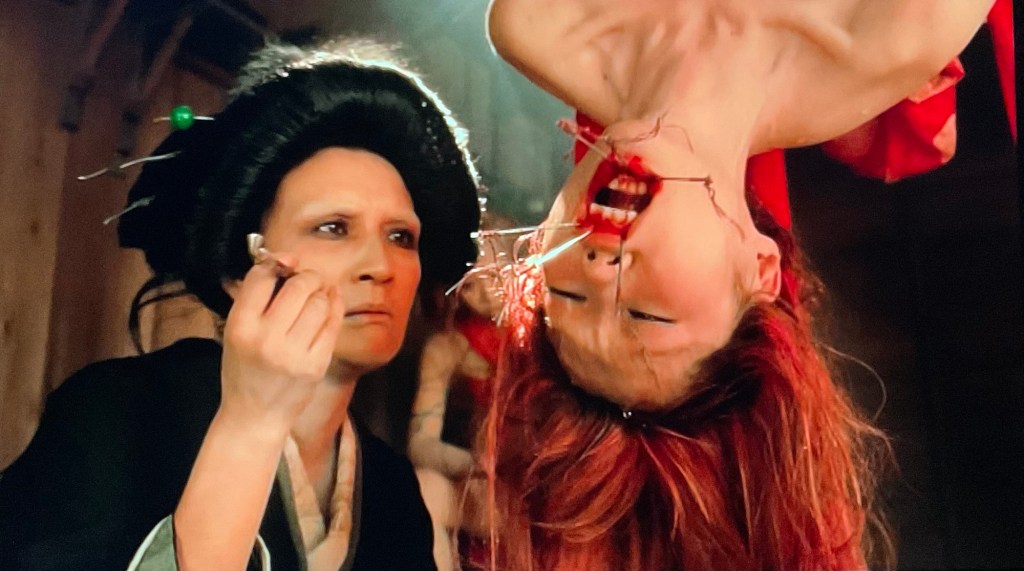
Imprint tells the haunting tale from the 1800s of American journalist, Christopher (Billy Drago), who travels to an island in Japan in search of the prostitute, Komomo (Michie) who he had abandoned years earlier, promising to return for her. Finding himself unable to locate Komomo, he takes residence in a bordello, where he hires the services of a deformed hooker (Youki Kudoh), but instead of taking her for carnal pleasures, he asks her to tell him a story, and so, she recounts to him the fate of his beloved Komomo, and so begins a story of rape, torture and degradation…

Youki Kudoh as the story teller

Beautifully shot, Imprint at times is like watching a traditional Japanese painting come to life. The flame haired whores with their blackened teeth take on the appearance of oni or evil spirits, who live on islands and take much delight in the torture of others. Miike’s ability to take the obtusely sickening and turn it into an image of beauty is a gift that few directors have, but he has in spades.

Wow! Now THIS is torture porn!

The only real problem I found with this episode of Masters of Horror was Billy Drago’s performance, but I do not think that was his responsibility. Obviously, this film was to be part of an American television series, and the performances were to be executed in English, but as much trouble as some of the Japanese cast members had in performing in English; it seemed that the normally wonderful Drago was being misdirected, and appeared to be overacting. I imagine that this was due to miscommunication from the language barrier between Miike and Drago.

Everything Miike did right with the nightmare of Audition, he has done again here with Imprint. Both brutal and beautiful, Imprint is an experience not to be missed. The extras on this DVD make it a pretty easy sell as well.

The menu screen to the Australian DVD

Disc: There are 6 extras on this disc.

Imprint: I Am The Director of Love and Freedom Takashi Miike is a comprehensive interview with Miike, not just about this film, but about j-horror and its continuing influence in western cinema.

Imprint: Imperfect Beauty is one of the better spfx documentaries I have seen in a while.

Imprint: Imprinting is basically a ‘making of’ but an extraordinarily good one. This doco features interviews with many of the cast and crew including Nadia Vanessa, the dialogue coach who taught most of the actors how to play their parts phonetically, and is incredibly thorough and interesting.

There is a brief but fairly comprehensive biography of director Takashi Miike.

Commentary is by Chris D from American Cinematheque and Wyatt Doyle of NewTexture.com. While these two really had naught to do with this film, the talk-through is informative, and their discussion about the total influence of western to Asian and Asian to western cinema is enlightening and provides some independent insights into the production and decisions made about this film.

DVD-ROM – screensaver and script (Unreviewed as I have no longer have a PC with a disc drive in it)

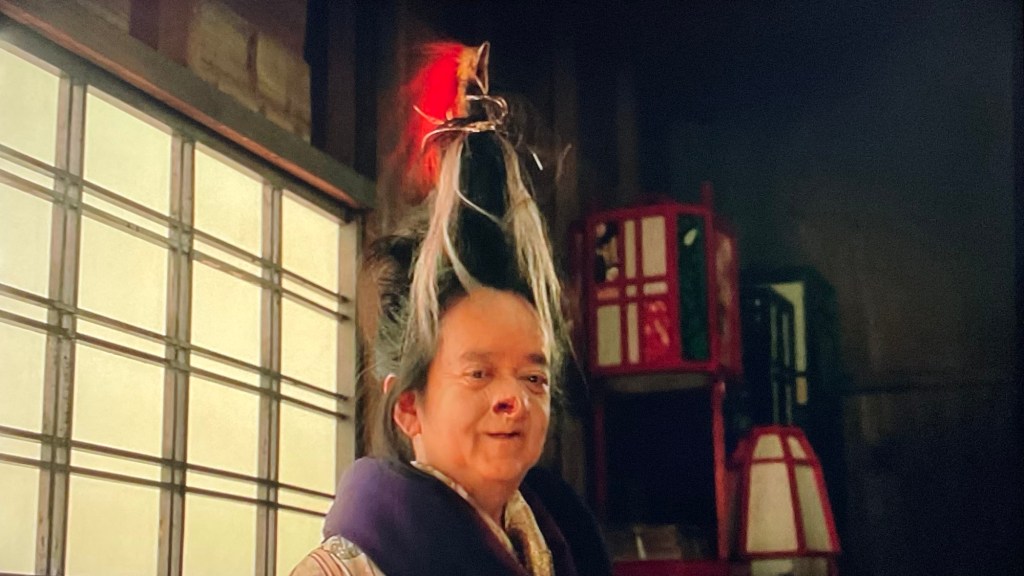
The weird chicken lady… yeesh!

The DVD was purchased from Ezydvd.

BURNT OFFERINGS (1976)

BURNT OFFERINGS (1976)

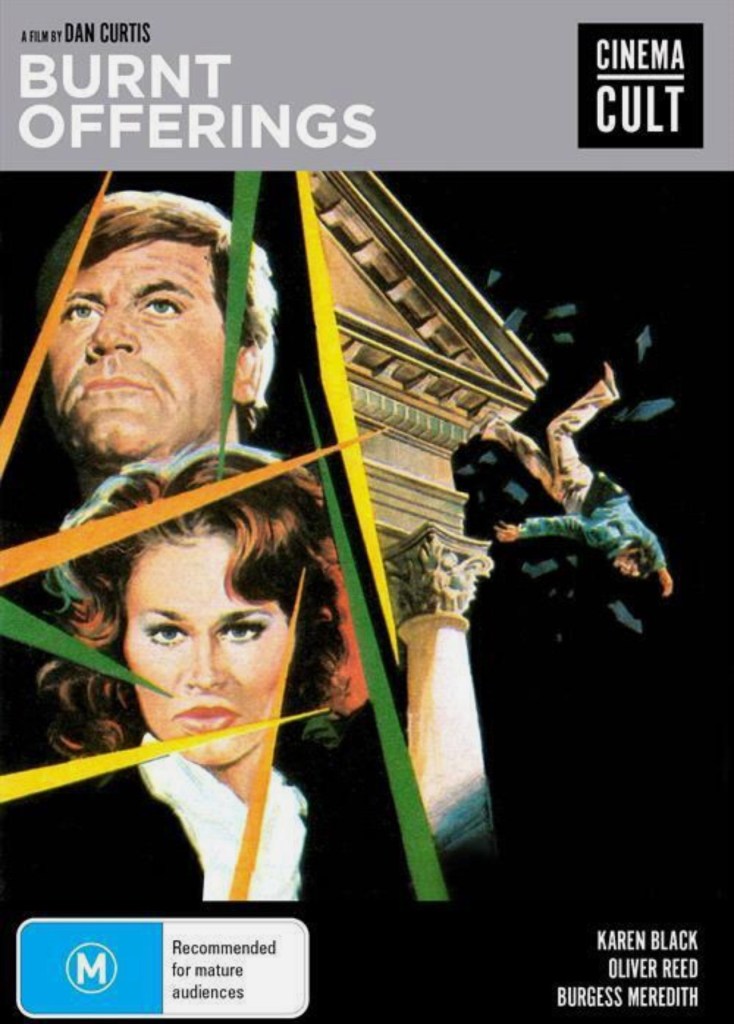
The cover to Cinema Cults DVD release

Recently, my wife and I bought a house in the country. Quiet, secluded, peaceful and away from the city. We gave up our lives of hustle and bustle to enjoy the countryside, but being a horror fan comes with its disadvantages. All I could think of before the move was the ‘supernatural’ problems that can come with a new house, and in amongst thinking about all those film that enjoy a ‘new’ house as a core of its plot, the is film, 1976’s Burnt Offerings, kept coming to mind.

Now I’ll just clarify I wasn’t scared of moving to the new house, I was just reminded of it by the situation, and a yearning to watch it came to mind, especially after my more recent foray into ‘new home’ horror with Night Swim came about.

Burnt Offerings was directed by Dark Shadows creator, Dan Curtis, and it was co-written by him with William F. Nolan, the co-creator of Logan’s Run, and based on the book of the same name, published in 1973 by Robert Marasco.

The cover to Marasco’s 1973 novel

Burnt Offerings tells of the Rolf family, Ben (Oliver Reed), his wife Marian (Karen Black) and their 12 year old son David (Lee Montgomery), who, along with their Aunt Elizabeth (Bette Davis) have rented a summer house in the country off the Allardyce family for an almost incomprehensible low price for the entire summer.

Oliver Reed and Karen Black: Cinema Legends

The Allardyces, Roy (Eileen Heckart) and her brother Arnold (Burgess Meredith) have only one stipulation for the stay: The Rolfs must feed their mother, a recluse who has no desire to leave with the siblings on their respite, three times a day and maintain the property whilst they stay.

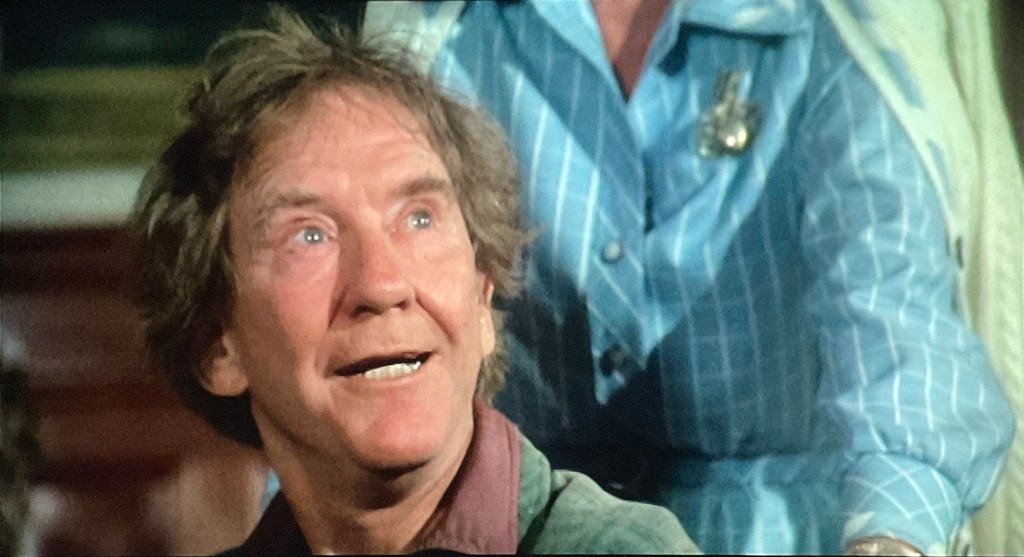
Another legend: Burgess Meredith

Soon, though, Ben starts to lose control and become violent and thuggish, as Marian becomes more and more obsessed with the house, but what is causing these behaviour changes, and what do they have to do with the horrible visions of the Chauffeur (Anthony James) that Ben is having… and does the house seeing to be repairing itself..?

There’s no doubt that Burnt Offerings is a classic film and that Dan Curtis’ style drips from every single frame.

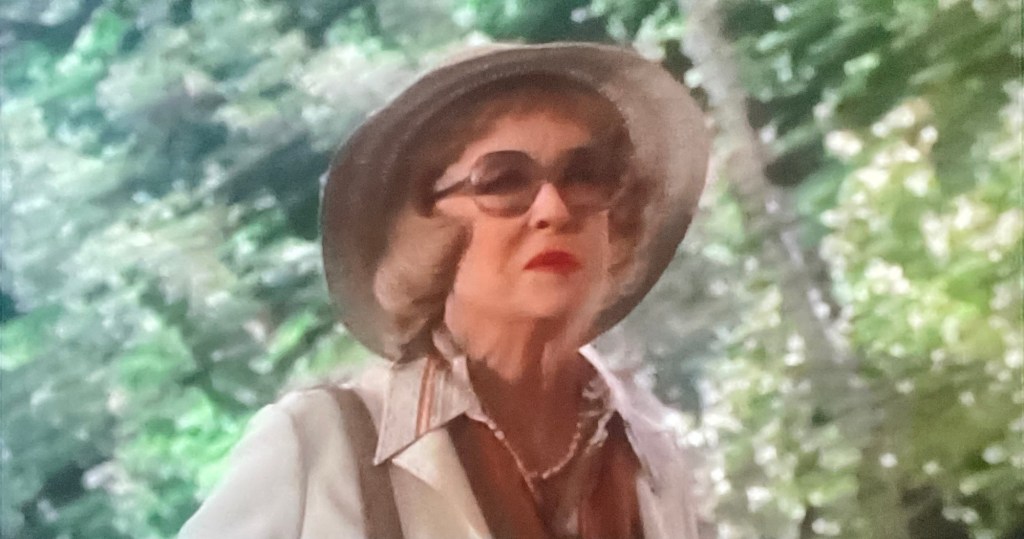
… and another: Bette Davis

The cast are suitable amazing when you consider the legends that are within it. Heckart and Meredith are totally bizarre as the brother sister combination, and Davis plays the ostentatious Aunt as only SHE can. Black and Reed are a fantastic choice as the leads and even though they, on paper, probably shouldn’t work together; if I am honest, they feel like a couple who would have a bizarre sex dungeon, or buy waterproof fake fur to make chaps.

Or maybe I am projecting.

The story is fascinating and a slow burn horror, certainly of its time, that probably couldn’t be made today as there is not the amount of WHIZ and BANG to keep a modern audience interested for too long. If I am completely honest, I do feel the almost two hour run time could have a bit of a trim as even I found my mind wandering through some of the longer breaks from the mysteries of the house.

One interesting note is that when Curtis first read the book, he liked it but pitied any director who took on the job of directing any film that may have been made of it as he didn’t like the way the novel finished. Upon taking the job of directing on, he promptly changed the ending.

It is a gem of a film though and it absolutely is marked with Curtis’s style, from the soundtrack to the way the scenes are laid out. I’ve watched it several times and even though it isnt a favourite of mine, I must admit to a regular revisit, probably just due to the providence of the director and actors, but more likely because I, like many, have an obsession with Karen Black.

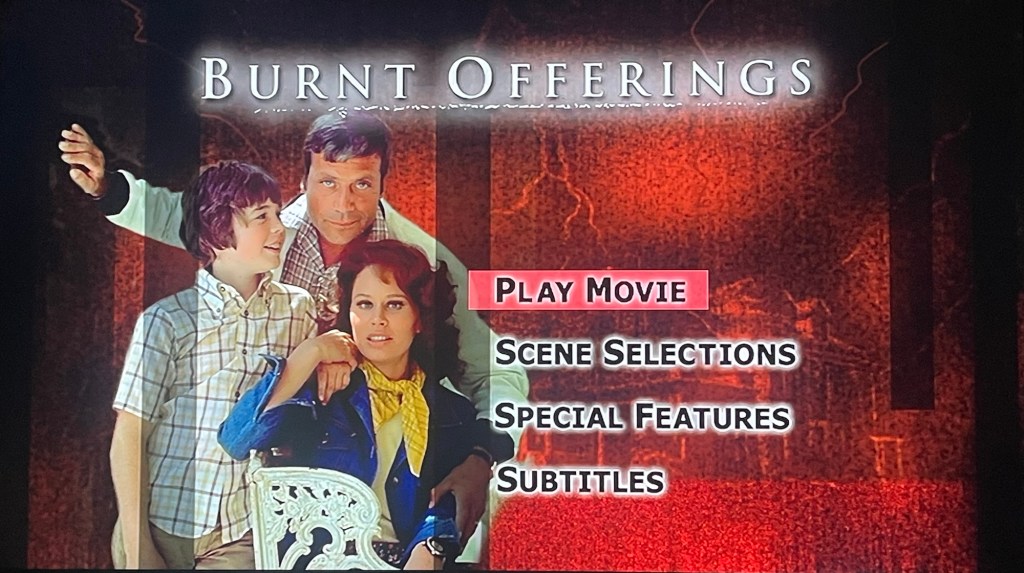
The Menu screen from the DVD

Disc: This DVD from the Cinema Cult isn’t the greatest as far as quality of image goes. I cannot say that I have seen a better image on a different release, but what I can say is that this is misty and slightly out of focus. This collection has two extras.

There is an audio commentary by Curtis, Black and Nolan which is lovely and conversation and fully discusses the film, with Nolan acting like a moderator more than someone who worked on the film at times.

There is also a theatrical trailer, which I have to say, is an absolute corker of a trailer!

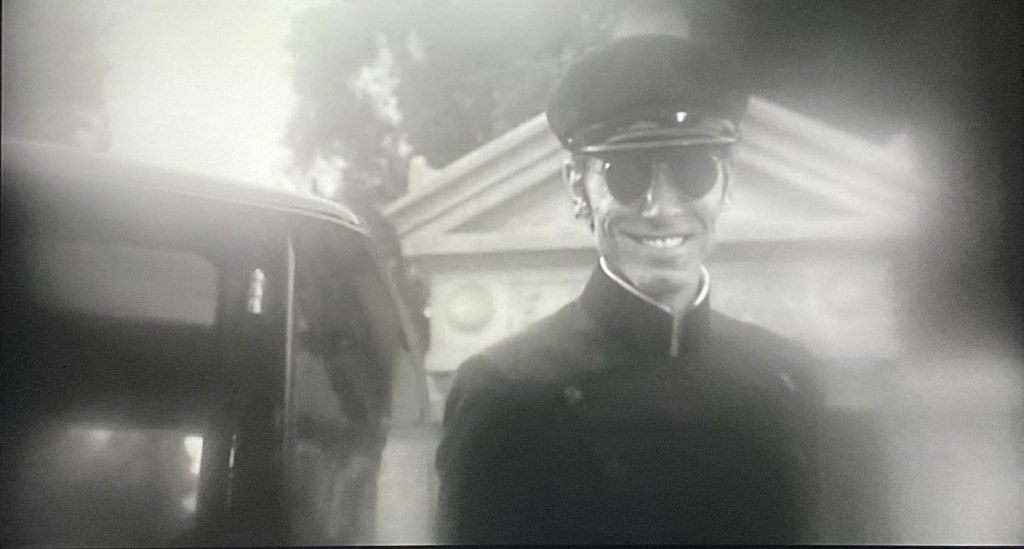
The mysterious Chauffeur

THE OWNERS (2020)

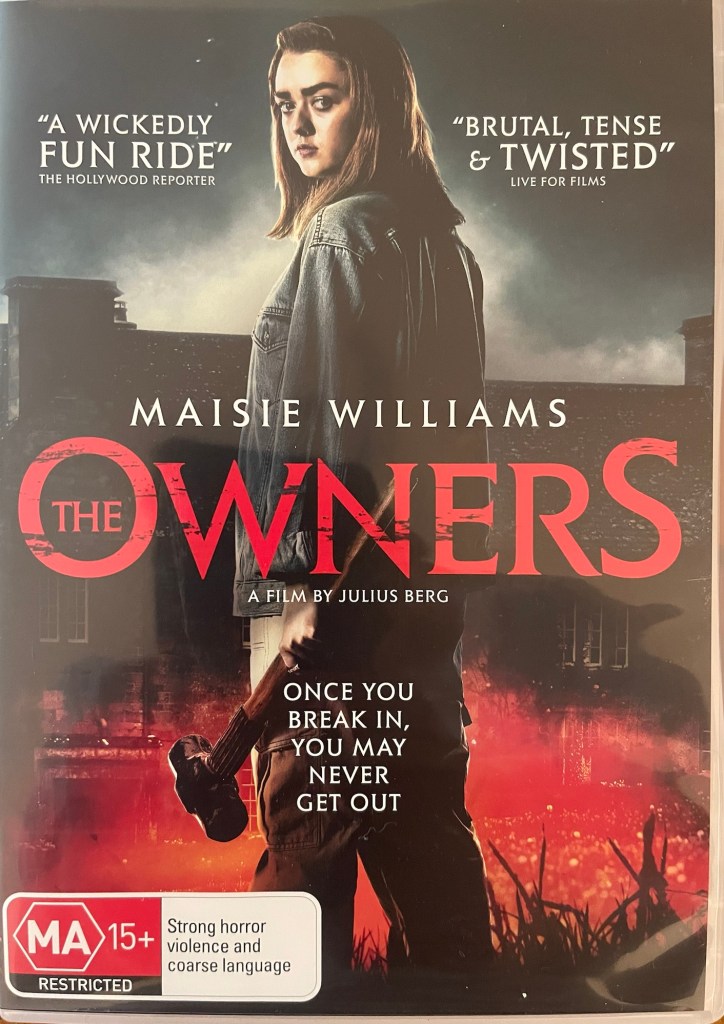
The cover of the Australian release of The Owners

THE OWNERS (2020)

A lot of the time my interest in a film is based on the actors in it more than anything else. I’m not talking about blockbusters here either, sometimes it is those weird little films that slip under the radar that have character actors who wouldn’t necessarily appear in a film of that type.

This film, The Owners, provided me with the thrill of two TV actors that I would never in a million years would have ever suspected appear in a film together: Maisie Williams from Game of Thrones, and former Doctor Who from the 1980s, Sylvester McCoy. (Ok, I guess they were both in Doctor Who but their appearances were about 30 years apart)

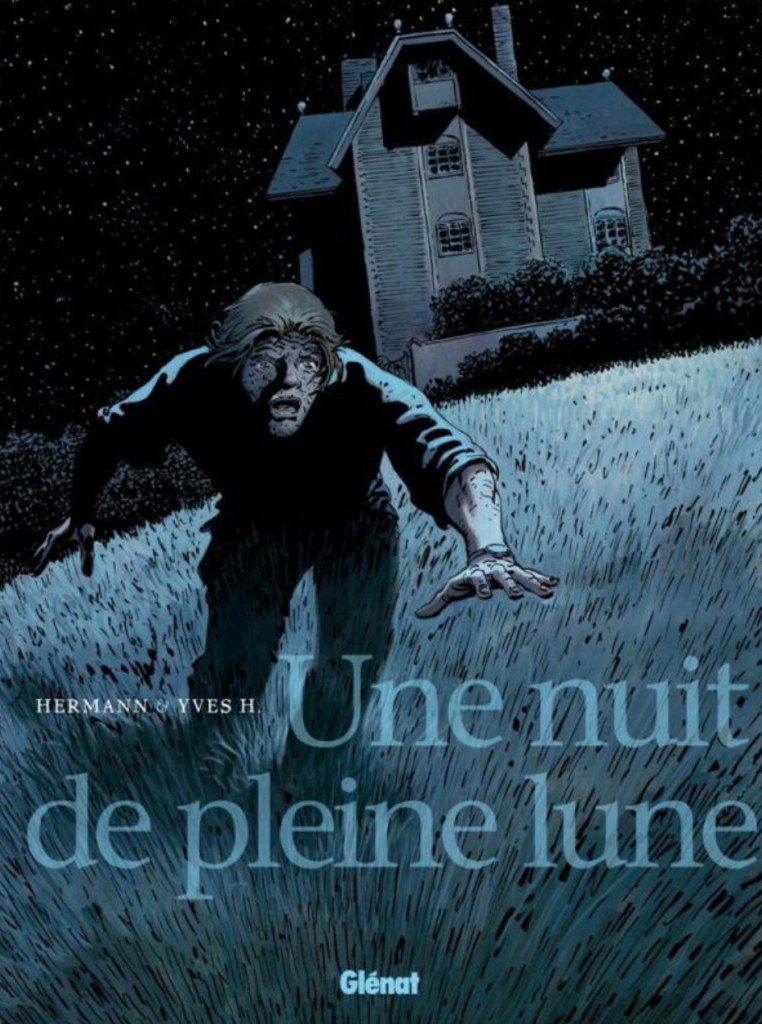
The Owners was directed by Julius Berg, who also co-wrote the script with Mathieu Gompel and Geoff Cox, and was based on the graphic novel, Une Nuit de Plene Lune by Hermann Huppen and Yves H.

The graphic novel ‘Une Nuit de Pleine Lune’

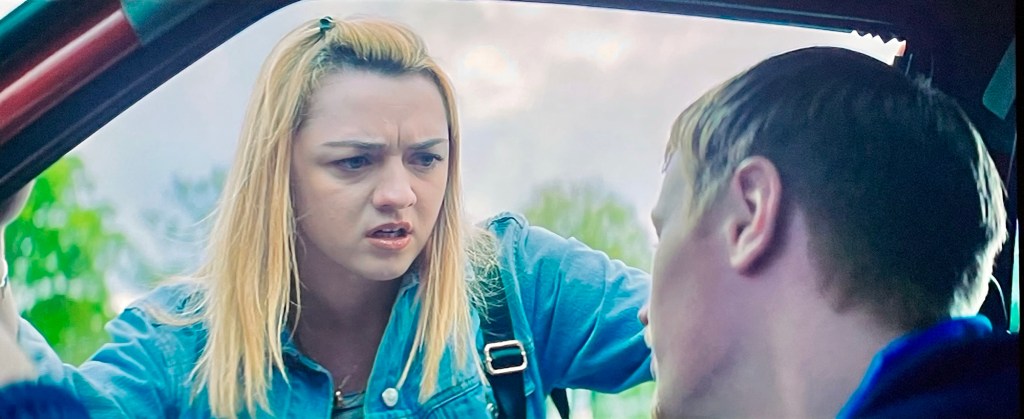
The film takes place in the UK, where Mary (Williams) is frustrated as her boyfriend, Nathan (Ian Kenny) has not returned her car so she can get to work. She finds him with two of his mates, Terry (Andrew Ellis) and someone unknown to her, Gaz (Jake Curran) is her car, stoned, and casing the house of the town doctor, Richard Huggins (McCoy) and his wife, Ellen (Rita Tushingham)

Mary (Maisie Williams) and Nathan (Ian Kenny)

They have been observing the house for a while and have the inclination to rob it as Terry’s mother, Jean (Stacia Hicks) told him casually that there was a big safe in the basement.

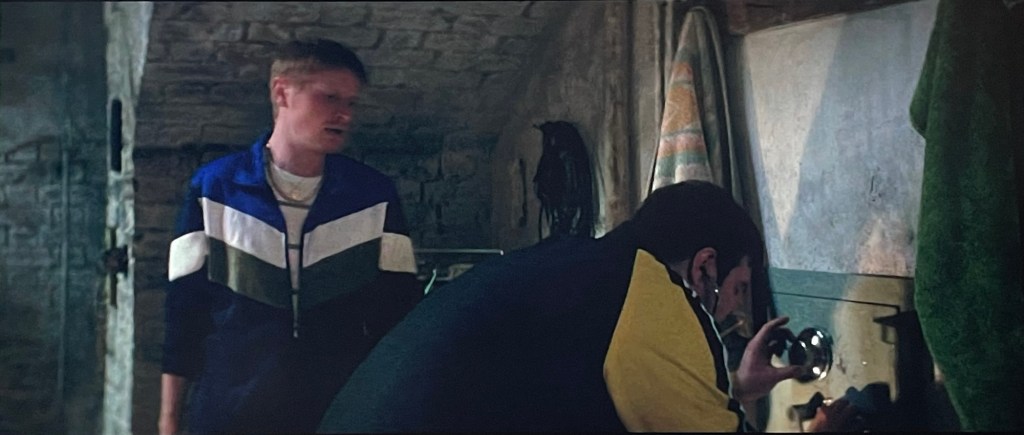
The boys break in and find the safe, leaving Mary outside waiting in the car, only to find that its an old safe that they don’t have the tools to

open, so the only answer is to wait for the elderly Doctor to return.

Nathan (Ian Kenny) and Terry (Andrew Ellis) aren’t cracking it

Mary gets frustrated after waiting for a while and is coaxed inside by Nathan, only to be horrified by their intentions, and when the couple do arrive home, things go from bad to worse as the Huggins’, tied to chairs in the basement, refuse to open the safe door…

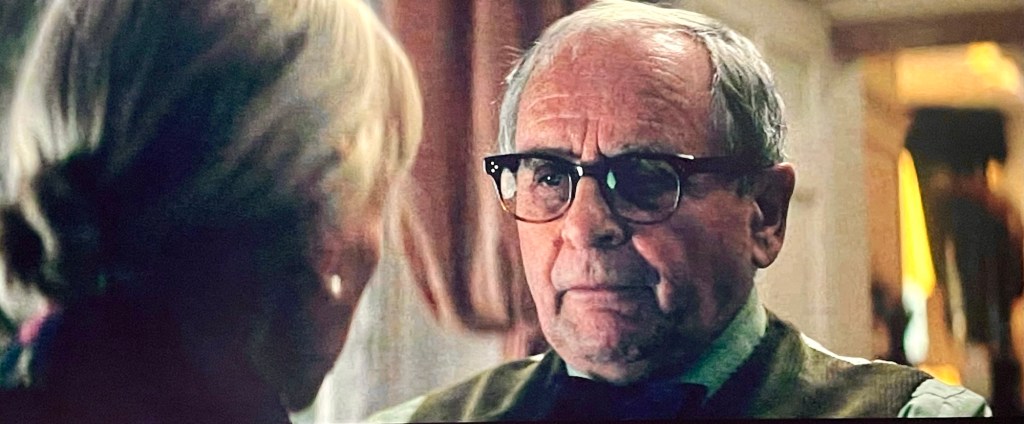
Mrs. and Dr. Huggins (Rita Tushingham and Sylvester McCoy

I remember seeing From Dusk Til Dawn for the first time and being stunned by the sudden gear shift from crime movie to vampire movie and whilst the gear shift isn’t as sudden, it is a breath of fresh air in a world of superhero sequels, Star Wars expansions and remakes. Sure it does riff on a few other films which i wont mention here as they will give the story away slightly, but the performances really sell it.

McCoy and Tushingham are delightful as the old couple, and remain endearing through the course of their performances no matter what they do; Tushingham in particular is amazing with her tragic dementia patient. Williams and Kenny play the couple whose relationship dissolves before our eyes really well and Ellis’ Terry is as frustrating a coward as ever.

The real villain of the piece is Curran’s Gaz, whose performance is straight out of an early Guy Ritchie flick and is more as more unlikable as his character is revealed. Its been a while since Ive seen a film where I’ve actively disliked a character and Curran really nails the wannabe hard man in this.

This was one of those pleasant surprises that really made me happy to have taken a $19 chance on a film I know nothing about except for some of the cast. Fantastic. Get on it.

The menu screen for the Australian DVD release

Disc: Surprising these days for a DVD in Australia, there actually is a couple of extras, even though its not much.

Behind the Scenes looks at the set up for some of the scenes in the film. It doesn’t go for very long and there isn’t any commentary on it but some of it is fascinating to see.

Interviews is a brief series of interviews with writer/ director Julius Berg, producers Alain De La Mata and Christopher Granier-Deferre, Maisie Williams, Sylvester McCoy, Rita Tushingham, Andrew Ellis, Jake Curran and Ian Kenny. Its just a fluff piece really but interesting to hear the cast and crews perspectives of the story.

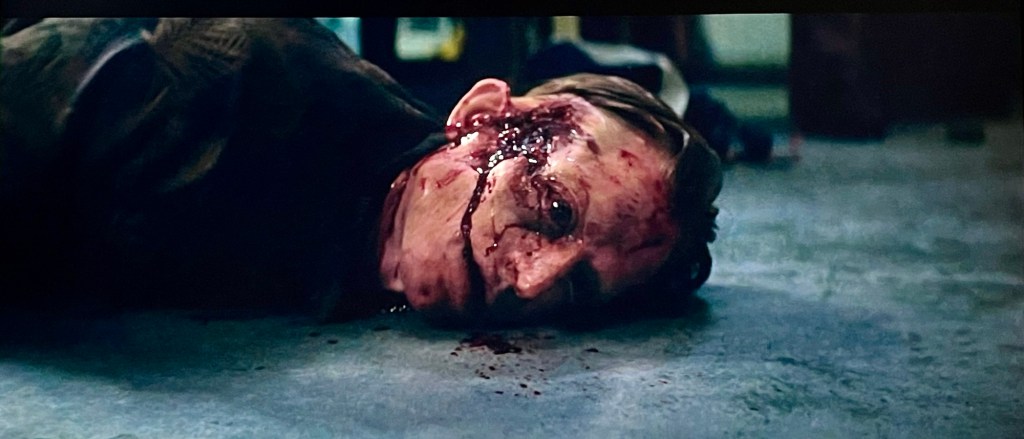
If Gaz (Jake Curran) doesn’t quit dope, he might get hammered

Black Phone (2021)

Black Phone (2021)

The Australian Bluray release of The Black Phone

A few years ago, the film Sinister absolutely put me on my butt. It had been such a long time since I’d seen a horror film that actually felt like a horror story, and not just gore for gores sake, or that post-millennial ghost story trope that teens and regular cinema goers gravitate towards like The Conjuring or Insidious: you know, that easy, non-threatening ghostly rubbish made for mass market that is not much different from a movie from the Marvel or Star Wars universe.

That film came out in 2012 and there was a massively disappointing sequel released a few years later but to me with that first film, writer/ director Scott Derrickson parked his creative car firmly into the parking station of my brain. I admit I was excited at his employment as the director of the 2016 Doctor Strange film, being a fan of the character, and whilst I liked the film, I was disappointed by the casting of Benedict Cumberbatch as the lead, not because I don’t like him as an actor, but instead due to his horrible American accent.

The idea of Derrickson making a film based on a short story of Joe Hill’s, from his 20th Century Ghost compilation (also republished/ repackaged as The Black Phone And Other Stories to cash in on the film’s release) is a great one, and the expansion of that prose with the incorporation of his own upbringing in a violent neighbourhood in the 70s really rounds the tale off perfectly, with the juxtaposition of the violence of familial assault, bullying and a serial child murderer being so in line that I’m still not sure after several viewings, which was the worse situation.

Ethan Hawkes portrayal of The Grabber is quite disturbing

The Black Phone tells of a small town in Denver, Colorado that has become the hunting grounds of a serial child killer called ‘The Grabber’ (Ethan Hawke) by the local papers.

Several boys who go to the same school as Finney (Mason Thames) have already been taken, by the Grabber, including a tough kid who defended Him against the school bullies, and parents are on edge.

Mason Thames as Finney

Finney’s sister, Gwen (Madeline McGraw) has inherited her mother’s second sight, and much to her father’s (Jeremy Davies) dismay, has been talking to the police regarding one of the missing boys, and she continues to use it after Finney is inevitably taken.

Madeline McGraw as Gwen

After being attacked when stopping to help a children’s magician, Finney finds himself trapped in the basement owned by the magician, aka The Grabber. The basement is soundproofed, with just a single window, a bare bed, and strangely, a black phone hanging on the wall.

The black phone, of course, no longer works, but for some reason, Finney hears it ring, and when answered, he is visited by the voices of The Grabber’s previous victims, all of whom have advice on how to survive The Grabber’s advances… but will Finney be able to escape?

Derrickson has taken a very short story by Joe Hill and has expanded upon it using elements of his own childhood, growing up in Denver, Colorado. He mentions in the commentary that some parts of the script writing process felt like therapy. The incredible thing about the story is the upbringing is so violent, the bullying so intense and the parental beatings so brutal that when Finney gets taken by The Grabber, it feels like a release, and that before he was taken that the other kids have a subtle, nuanced jealousy of those no longer subject to the abuse.

This is a difficult thing to convey and not an idea you’d expect in a horror movies as it sounds more like a family drama film. The key to having this idea work was to have a cast capable of doing it, and even though Derrickson had many young actors in their roles, they were able to do so perfectly. Derrickson proves himself to very much be an actor’s director with how delicate those performances are.

The whole atmosphere is created with Derrickson’s choices in the presentation of the film. The soundtrack is provided by Mark Korven of The VVitch and The Lighthouse and when you consider Derrickson claims the pitch to him was ‘childhood trauma’, he absolutely hammered it home. These sounds in co-operation with the visuals which appear VHS-like at times, and in psychic visions have the grain of a Super 8, make for a film that has a Texas Chain Saw Massacre styled documentary or old news footage feel, which makes it all so much more effective.

The film was a wonderful example of modern horror filmmaking, and especially one done without a generic, so-called ‘true’ ghost story attached to it. I honestly can’t recommend seeing this film enough; it truly is a modern classic of horror movie storytelling. Do me one favourite please, Hollywood: you’ve made a wonderful, original film, please don’t consider remaking or sequelising this film.

Disc: This film was reviewed using the Australian Bluray release, which contains the following extras.

There are 2 deleted scenes which as usual, the film doesn’t suffer for them being absent.

There is a bunch of shorts that make up the next 4 extras that honestly, I suspect would have been far more interesting as a 40 minute ‘making of’ instead of a selection of shorts.

Ethan Hawke’s Evil Turn sees Hawke discuss what it takes to create an ‘evil’ character for a film, and then there is the usual ‘he’s so scary’ accompanying stuff. Hawke’s commentary about playing The Grabber is certainly interesting.

Beautifully shot and atmospheric, Derrickson’s film is a treat

Answering the Call: Behind the scenes of The Black Phone is a usual BTS styled thing, and it only goes for ten minutes, but still some of the sound bytes are interesting. There is a bit of circle-jerk offing as you would expect, but it still offers some insights to the making of the film.

Devil in the Design looks not just at the style of the Grabber and his basement cell, but also making it look like the 70s, and how it felt like it was real, and properly lived in.

Super 8 Set briefly discusses the use of Super 8 film to signify the dreams from the film, and how it’s appearance gives an unsettling feeling.

Shadowprowler – a Short Film by Scott Derrickson was filmed during lock down and stars, and is based upon an idea by his son Dashiell, with the music provided by his other son, Atticus, who also plays in the film. It’s a quirky little home-made horror film about home invasion made by a family who was bored whilst living in Kevin Sorbo’s house.

There is an amazing director’s commentary with Scott Derrickson which acts as both a discussion on the creation of his own film, and his own upbringing. Occasionally it almost seems like Derrickson is exorcising some ghosts from his own past, maybe he was, but the entire commentary is a must listen.